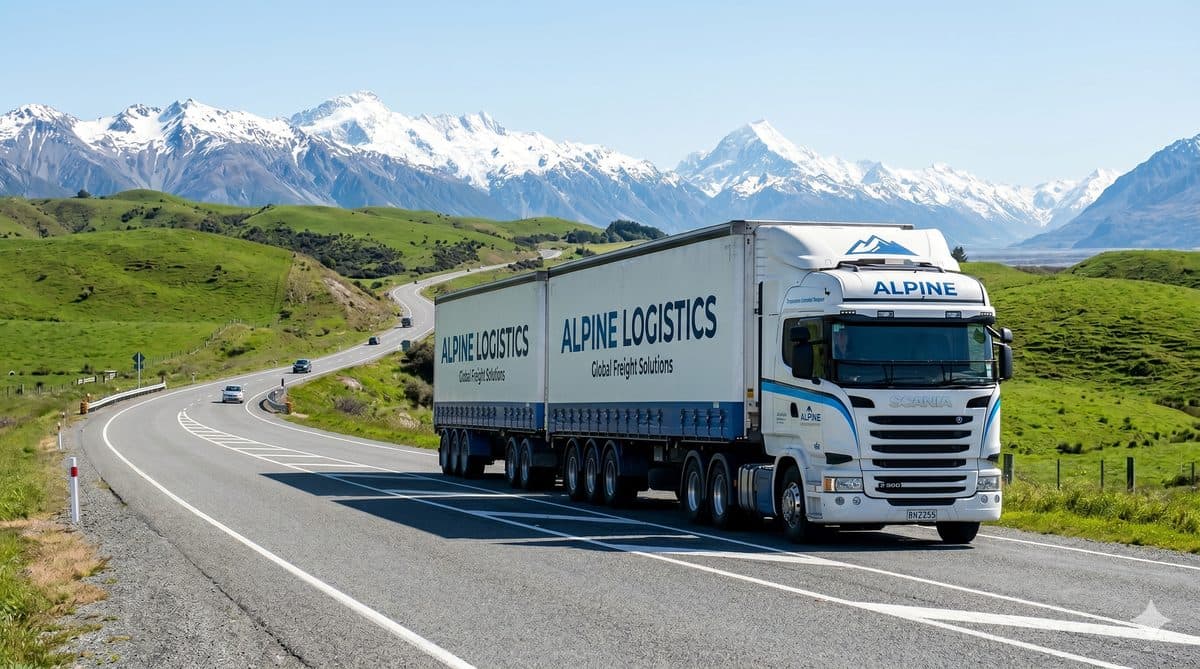
Operating a heavy goods vehicle in this country comes with significant regulatory obligations. Waka Kotahi NZTA, WorkSafe NZ, the Ministry for Primary Industries, and local authorities all have roles in regulating heavy vehicle operations. Non-compliance creates both direct regulatory consequences (fines, prosecutions, licence suspensions) and insurance implications (coverage disputes at claim time).
This is a practical overview for HGV operators — what the key regulations require in 2026, and how they interact with your insurance.
NZTA and the Road User Charges system
All heavy vehicles (GVM 3,500 kg+) must pay Road User Charges (RUC). RUC is levied per kilometre, with rates varying by vehicle type and axle configuration. The Revenue Collection Act 2012 governs RUC obligations.
In 2026, NZTA has extended its digital enforcement capabilities significantly. Remote licence plate recognition cameras at weigh stations and on-road locations now verify RUC licence status in real time. Operators cannot rely on enforcement gaps — non-compliance is increasingly detected automatically.
RUC evasion is an infringement offence with substantial fines that scale with the degree of evasion and the period of non-compliance. For large fleet operators, historical RUC underpayment can generate six-figure retrospective assessments.
From an insurance perspective, RUC non-compliance is relevant if an incident occurs while operating without current RUC. While it does not directly void motor vehicle cover, it is a factor that insurers consider as part of a broader assessment of operator compliance culture.
Ready to get specialist cover?
Connect with a specialist broker. Response within 24 hours.
Weight limits: standard, 50MAX, and HPMV
Standard weight limits for this country remain: 8.2 tonnes per axle (standard single axle), 18 tonnes per twin axle, and 44 tonnes GCM for a standard semi-trailer combination. Exceeding these limits is an infringement offence with fines that scale with the degree of overloading.
The High Productivity Motor Vehicle (HPMV) framework — which includes 50MAX combinations — allows operators to exceed standard limits on specifically approved routes with appropriately configured vehicles. 50MAX vehicles can operate at up to 50 tonnes GCM, provided they have NZTA route approval, meet vehicle configuration requirements (additional axles, air suspension, enhanced braking), and carry the appropriate permit.
For insurance purposes, 50MAX and HPMV operations must be disclosed to your insurer. The risk profile of a 50-tonne combination operating on a HPMV route differs from a standard 44-tonne operation. Public liability limits, road clearing cover, and agreed values should all reflect the higher mass and consequentially greater potential incident severity.
Overloading a vehicle — operating above the approved mass without a permit — can affect insurance coverage. If an incident occurs and the vehicle was overloaded, and the overloading contributed to the incident (overloaded brakes failing on a downgrade, unstable load causing rollover), the insurer may investigate the overloading as a contributing cause and its implications for coverage.
Certificate of Fitness: compliance and insurance interaction
All heavy vehicles must hold a valid Certificate of Fitness (CoF). CoF inspections are conducted by approved vehicle inspection organisations (VIOs) at intervals depending on vehicle type and age — typically every 6 months for most HGVs.
CoF requirements cover brakes, steering, tyres and wheels, lights and signals, load security equipment, safety equipment, exhaust and engine, and cab and body condition. Defects identified in the CoF inspection must be rectified before the certificate is issued.
Ready to get specialist cover?
Connect with a specialist broker. Response within 24 hours.
Insurance and CoF: operating a vehicle with an expired CoF, or operating with known defects that would fail a CoF inspection, is a material insurance risk. Most HGV policies require vehicles to be maintained in a roadworthy condition. If an incident occurs and investigation reveals the vehicle had known defects — defective brakes, worn tyres, non-functional lights — that a reasonable CoF inspection would have identified, the insurer will assess whether the defect contributed to the incident.
Keep CoF records meticulously. Address defects identified in inspections within the required timeframes. Maintain maintenance records that demonstrate proactive vehicle management. These records are your defence if a post-incident investigation queries vehicle condition.
Driver hours rule and fatigue management in 2026
The Land Transport (Driver Hours) Rule 2007 governs work time for heavy vehicle drivers. The core limits remain: maximum 13 hours continuous work time in any 24-hour period; at least 10 consecutive hours off-duty between work periods; and maximum 70 hours of work time in any 7-day period.
From an enforcement perspective, NZTA's enforcement activity in 2025–2026 has increased its focus on electronic logbook compliance and fleet operator work time management systems. Operators who rely on paper logbooks face increasing scrutiny at weigh station checks. Electronic logbook systems are increasingly expected as standard for any serious commercial operation.
WorkSafe NZ exercises jurisdiction over fatigue as a workplace health and safety hazard under the Health and Safety at Work Act 2015. Operators (as PCBUs) must proactively manage fatigue risk — which means rostering systems, work time monitoring, driver training on fatigue recognition, and documented fatigue management plans.
If an incident occurs and driver fatigue is identified as a contributing factor — through logbook analysis, telematics data, or witness evidence — both regulatory liability (under the Land Transport Act for dangerous driving) and insurance implications follow. Work time non-compliance can affect coverage if the insurer can demonstrate it was a contributing cause of the incident.
Ready to get specialist cover?
Connect with a specialist broker. Response within 24 hours.
Transport service licensing
Commercial freight transport requires a transport service licence under the Land Transport Act 1998. Licences are issued by NZTA and require operators to be fit and proper persons, maintain financial viability, ensure drivers hold appropriate class licences, and meet vehicle maintenance standards.
The class licence requirements are: Class 2 for rigid trucks up to 18 tonne GVM; Class 3 for larger rigid trucks; Class 4 for articulated combinations; and Class 5 for articulated combinations carrying passengers (not typical for freight). Ensure all drivers hold the correct class for the vehicles they operate — an unlicensed driver operating a Class 4 vehicle is a serious compliance breach.
Operating without a valid transport service licence affects insurance coverage. If your operator licence is suspended or has lapsed, and an incident occurs during that period, insurers will investigate the licensing status as part of the claim assessment.
Dangerous goods transport: HSNO compliance
If you transport HSNO-classified substances (petroleum products, chemicals, compressed gases, explosives), specific additional requirements apply under the Hazardous Substances and New Organisms Act 1996.
Driver training and endorsement: a dangerous goods (DG) endorsement on the driver licence is required for certain HSNO classes. Ensure all drivers transporting applicable substances hold the DG endorsement.
Vehicle placarding: HAZCHEM plates and UN number markings must be correctly displayed. Incorrect or missing placards is an infringement offence that NZTA enforcement officers actively check.
Ready to get specialist cover?
Connect with a specialist broker. Response within 24 hours.
Emergency information: a dangerous goods manifest and emergency information must be carried in the cab and available to emergency services in an incident.
Non-compliance with HSNO transport requirements at the time of an incident is a material issue for insurance coverage — particularly for environmental liability claims where the regulatory compliance record is relevant.
Chain of responsibility
The chain of responsibility (CoR) framework under the Land Transport Act extends compliance obligations beyond the driver to everyone in the supply chain: the consignor, the operator, the scheduler, and the loader. If a consignor instructs you to carry an overloaded vehicle, or a scheduler rostered a fatigued driver, they share liability for the resulting breach.
For insurance purposes, CoR liability means that your exposure is not limited to incidents caused by your own actions. If you are a principal carrier using sub-contractors, your CoR obligations include taking reasonable steps to ensure sub-contractors comply with heavy vehicle standards.
Review your current programme with your broker and confirm that employers and statutory liability cover — which covers WorkSafe NZ fines and CoR-related regulatory penalties — is included at an adequate limit. The key principle: compliance is not just a legal obligation. It is a condition of your insurance coverage. A well-structured HGV programme, supported by proactive compliance management, protects both your business and your coverage.
General information for heavy vehicle operators, drawn from the primary sources linked in the article. It is not personal advice. Information about providers was accurate at the time of publishing and may change.