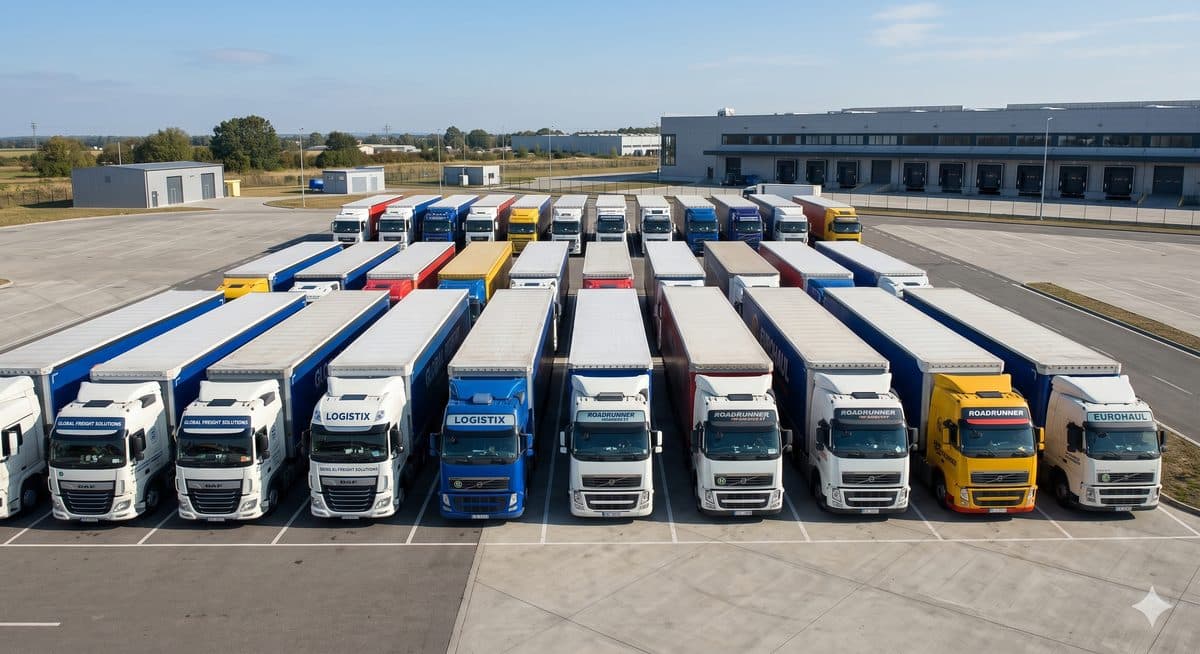
Refrigerated Trucks & Cool Carriers Insurance
Insurance for refrigerated trucks and controlled temperature vehicles carrying food, pharmaceuticals, and other temperature-sensitive cargo.
⚠️ Key Risks
- •Refrigeration unit breakdown — cargo spoilage
- •Power failure during overnight parking
- •Temperature excursion on pharmaceutical loads
- •Cargo liability for high-value chilled/frozen product
- •Door seal failure on cold store deliveries
- •Reefer unit theft and fuel drain
✓ Coverage Checklist
- ✓Comprehensive motor vehicle cover
- ✓Refrigeration unit cover
- ✓Cargo spoilage cover
- ✓Carriers liability — temperature-sensitive goods
- ✓Breakdown cover
- ✓Public liability
Refrigerated trucks — reefers — are among the most sophisticated and valuable heavy vehicles in everyday operation in this country. A modern articulated reefer unit with a Carrier Transicold or Thermo King refrigeration system represents $350,000 to $450,000 in total asset value. The cargo it carries — chilled lamb and beef for Asian export markets, dairy product for supermarkets, fresh produce from the Hawke's Bay and Marlborough, or temperature-sensitive pharmaceuticals — can be worth more than the truck itself.
The cold chain is fundamental to food safety, export quality assurance, and pharmaceutical supply chain integrity. From the moment a chilled load is picked up at a Fonterra cold store, a meat processor in Invercargill, or a produce packing house in Pukekohe — through the overnight run to Auckland, Wellington, or Christchurch — to the moment it is delivered and transferred into refrigerated storage at a distribution centre or supermarket, the temperature must be maintained within defined tolerances. A reefer breakdown that allows cargo temperature to rise even a few degrees can compromise food safety, destroy export grade product, and create substantial liability for the carrier.
The Refrigeration Unit — A Significant Asset in Its Own Right
The refrigeration unit mounted on a reefer trailer or rigid reefer body is a sophisticated piece of machinery that must be specifically covered in your insurance policy. A new Carrier Transicold X4 7300 or equivalent Thermo King unit — the type used on articulated reefer trailers — costs $45,000 to $85,000. Damage from accident, theft, vandalism, electrical fault, or fuel contamination (reefers run on diesel; incorrect fuel can cause expensive damage) is covered under a comprehensive policy, provided the unit is specifically declared and valued.
Wear and tear, mechanical breakdown, and manufacturing defects are typically excluded from motor vehicle cover — these are addressed through the manufacturer's service agreements, extended warranty programmes, and breakdown cover add-ons. It is important to understand this distinction clearly: the insurance responds to accidental damage and sudden events, not gradual deterioration. This is why preventive maintenance programmes and documented service records are so important — they demonstrate the vehicle and refrigeration unit were in proper condition before any loss event.
Cargo Spoilage — The Critical Exposure for Reefer Operators
Cargo spoilage is the core risk that distinguishes reefer operators from general freight carriers. If your refrigeration unit fails — whether from an electrical fault, a fuel run-out (reefer tanks are separate from the truck's fuel tank and must be managed independently), a mechanical failure, or a power supply interruption during overnight parking — and you arrive at your delivery point with a warm load, the cargo owner will pursue the carrier for the full value of the spoiled product.
Ready to get specialist cover?
Connect with a specialist broker — response within 24 hours.
Under the Contract and Commercial Law Act 2017 (CCLA), carriers have a legal duty of care for goods in transit. Temperature maintenance is a fundamental part of that duty when carrying temperature-sensitive goods. A cargo spoilage claim can arise from:
- A mechanical failure of the reefer unit while the truck is running - A fuel run-out on the reefer unit overnight in a depot - A power supply failure if the reefer is plugged into a cold store overnight - A door seal failure that allows warm air to enter the cargo compartment - A driver error in temperature setting — running the unit too warm or too cold
Cargo spoilage cover pays the value of the cargo when spoilage is directly caused by a mechanical or electrical failure of the refrigeration unit. Exclusions include user error (setting the wrong temperature and failing to check), inherent vice (product that was already compromised at pickup), and non-compliance with food safety requirements. Continuous temperature logging — with a calibrated data logger that records in real time — is not just best practice; it is the evidence you need to demonstrate that your equipment was operating correctly at pickup, and that any spoilage event was caused by a specific failure rather than negligent operation.
The Auckland to Invercargill Run — Scale of Exposure
The full-length reefer run from Auckland to Invercargill — or the reverse journey bringing Southland product north — illustrates the scale of exposure a reefer operator carries. A loaded articulated reefer carrying premium lamb or dairy product destined for the Christchurch cold chain might carry cargo worth $80,000 to $150,000. An overnight breakdown of the refrigeration unit without the driver noticing could result in total loss of the cargo, plus the carrier's liability for the full value under the CCLA.
Add the fact that the truck itself is worth $400,000, the reefer unit is worth $60,000, and the daily revenue on an inter-island freight run is $2,000 to $3,500, and the total exposure on any single run — vehicle, cargo, and downtime — can easily exceed $500,000.
Ready to get specialist cover?
Connect with a specialist broker — response within 24 hours.
The NZ Food Act 2014 and Cold Chain Obligations
The NZ Food Act 2014 places obligations on food businesses operating temperature-controlled supply chains. Food businesses that carry chilled or frozen food under commercial supply contracts — with supermarket chains (Countdown, Pak'nSave, New World), food service distributors, or export processors — are subject to food safety programme requirements that include temperature monitoring and record-keeping.
A cargo spoilage claim that involves a regulatory breach — carrying food at incorrect temperatures without maintaining temperature logs — creates both a coverage risk (insurers may argue the breach contributed to the loss) and a regulatory risk (MPI food safety enforcement). Operate your reefer in full compliance with the Food Act 2014 requirements and keep your documentation current.
Fonterra and Supermarket Contract Requirements
Major freight contracts — with Fonterra, Progressive Enterprises, or Woolworths NZ — typically specify minimum insurance requirements as a condition of the transport contract. These requirements commonly include:
- Minimum carriers liability limits (often $1,000,000 to $2,000,000 per consignment) - Cargo spoilage cover - Public liability at $5,000,000 or more - Temperature monitoring and record-keeping systems
Your broker should review your major transport contracts and ensure your insurance meets all contractual requirements. A policy that is adequate for general market purposes but falls short of a specific contract requirement leaves you in breach of contract — and potentially without insurance support when you most need it.
Ready to get specialist cover?
Connect with a specialist broker — response within 24 hours.
Pharmaceutical Reefer Operations
If you carry pharmaceutical products — vaccines, injectable biologics, cold-chain medications — the liability exposure is categorically different from food product. Pharmaceutical cargo is typically insured by the pharmaceutical company or distributor under their own marine cargo or stock throughput policy, but if a carrier's negligence causes a temperature excursion and a pharmaceutical batch is destroyed, the pharmaceutical company's insurer will pursue the carrier's liability policy in full recovery.
Pharmaceutical cold chain standards — set by Medsafe (the NZ medicines regulator) and aligned with international GDP (Good Distribution Practice) guidelines — are stricter than food cold chain standards. Temperature tolerances are tighter, documentation requirements are more rigorous, and the consequences of breach are more serious. Carriers who regularly haul pharmaceutical product should discuss with their broker whether their carriers liability limit and cargo spoilage cover are appropriately structured for this specific exposure.
Downtime and Reefer Unit Breakdown Assistance
A reefer truck off the road creates two simultaneous problems: the revenue stop from the vehicle being unavailable, and the cargo management problem if the cargo cannot be transferred to a functioning reefer immediately. Downtime cover addresses the revenue loss during repair. But breakdown assistance — a separate product to motor vehicle insurance — provides on-road support when a reefer unit or the truck itself breaks down during a run.
For operators on overnight inter-island runs or long South Island routes, breakdown assistance cover that includes refrigeration-specialist response is critical. A reefer unit failure at 2am on SH1 between Palmerston North and Levin requires a response that standard breakdown assistance (designed for cars and light vehicles) cannot deliver. Specialist heavy vehicle breakdown cover with reefer technical capability is available through specialist brokers and should be a standard part of the reefer operator's insurance programme.
Downtime benefit rates should reflect actual daily net revenue. A long-haul articulated reefer running Auckland to Christchurch generates $2,000 to $3,500 per day. A refrigerated rigid on urban supermarket delivery generates $800 to $1,500 per day. Calculate your actual figure, discuss it with your broker, and review it at every renewal as your freight rates change.
Ready to get specialist cover?
Connect with a specialist broker — response within 24 hours.
Agreed Value for Reefer Combinations
A modern articulated reefer combination — late-model prime mover plus refrigerated trailer with Carrier Transicold refrigeration — represents $400,000 to $500,000 in total replacement cost at current prices, including the cost of the reefer unit itself. Insuring this combination at depreciated book value rather than agreed replacement value is one of the most common and most damaging mistakes reefer operators make.
If the combination is written off in an accident and the insurer settles at depreciated market value — which may be $280,000 for a five-year-old combination — you are $120,000 to $200,000 short of what you need to replace the unit and resume operations. Agreed value policies eliminate this gap by locking in the replacement cost at policy inception and paying that figure on a total loss, without depreciation argument or market value dispute.
Your broker should review agreed values at every renewal. Reefer trailer values and refrigeration unit prices have moved substantially in recent years as European and North American manufacturing capacity constraints have reduced supply. What was correctly insured at renewal two years ago may be significantly underinsured today.
Reefer Unit Maintenance and Underwriting Evidence
Refrigeration unit maintenance records are an increasingly important part of the underwriting conversation for reefer operators. An insurer who can see documented evidence of Carrier or Thermo King factory-authorised servicing on six-monthly intervals, calibrated temperature sensor records, and annual preventive maintenance inspections is looking at a materially lower cargo spoilage risk than an operator who cannot produce service records.
Some reefer unit manufacturers offer extended maintenance contracts that include remote diagnostics — units fitted with remote monitoring can transmit temperature and performance data in real time, allowing depot managers to identify developing faults before they cause a cargo loss event. Remote diagnostics data also serves as independent evidence of unit condition in the event of a disputed cargo spoilage claim. The technology is available, it is cost-effective for operators running multiple reefer units, and it is increasingly recognised by specialist underwriters as a positive risk management factor.
Ready to get specialist cover?
Connect with a specialist broker — response within 24 hours.
Pre-Trip Reefer Checks — The Carrier's Responsibility
The carrier's legal duty of care under the Contract and Commercial Law Act 2017 begins before the load is picked up. A pre-trip inspection that confirms the refrigeration unit is running correctly, the temperature set-point is correct for the product being carried, the fuel level in the reefer tank is adequate for the journey, and the door seals are in good condition is the carrier's first line of defence against a cargo spoilage claim.
Documenting these pre-trip checks — in a physical check sheet retained with the delivery paperwork, or through an electronic pre-trip system — creates the evidence record that protects you if a cargo owner later claims the spoilage occurred during transit due to equipment failure. Without pre-trip documentation, you have no way to demonstrate the unit was operating correctly at the start of the journey.
To connect with a specialist broker for refrigerated truck insurance, complete the quote request on this page and expect a response within 24 hours.
Frequently Asked Questions
Am I covered if my refrigeration unit breaks down and the cargo spoils?
Only if you have cargo spoilage cover specifically included in your policy. Standard motor vehicle cover insures the truck and refrigeration unit for physical loss or damage — it does not automatically cover cargo that spoils as a result of a mechanical failure.
Does my policy cover the refrigeration unit as well as the truck?
The refrigeration unit must be specifically declared and valued. If you insure the truck without noting the reefer unit separately, you may find it is excluded or under-insured at claim time.
What temperature logging do I need for my cargo spoilage cover to be valid?
Most insurers require continuous temperature data from a calibrated logger to support a cargo spoilage claim. A manual temperature check at pickup and delivery is typically insufficient — you need a record of what happened in between. Fit a compliant data logger and ensure it is calibrated and downloading correctly.
Do my major transport contracts affect my insurance requirements?
Yes — contracts with Fonterra, supermarket chains, or pharmaceutical distributors typically specify minimum insurance requirements including carriers liability limits and cargo spoilage cover. Your broker should review your contracts and confirm your policy meets all contractual conditions.
Get a Refrigerated Trucks Quote
Specialist broker response within 24 hours
Related Coverage Types
Specialist Brokers
Access the brokers who specialise in refrigerated trucks insurance.
Compare Brokers