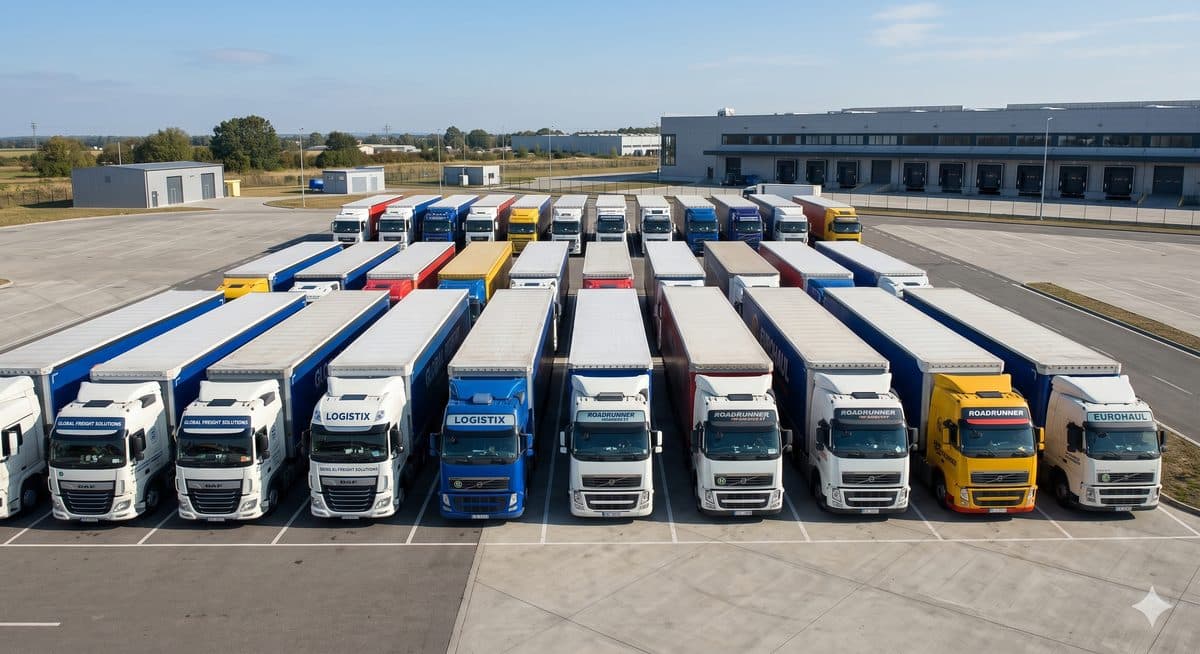
Tipper Trucks & Dump Trucks Insurance
Cover for tipper trucks, dump trucks, and aggregate carriers working in quarrying, roading, and construction.
⚠️ Key Risks
- •Overheight tipper body — bridge strikes
- •Aggregate spillage on public roads
- •Rollover on loose quarry surfaces
- •Brake failure under heavy load on steep grades
- •Third-party windscreen damage from loose aggregate
- •Tyre damage on quarry rock surfaces
✓ Coverage Checklist
- ✓Comprehensive motor vehicle cover
- ✓Public liability — windscreen/property damage third-party
- ✓Off-road use cover
- ✓Tyre and rim cover
- ✓Road clearing and aggregate cleanup
- ✓Downtime and loss of use
Tipper trucks are fundamental to the construction, roading, and quarrying industries — delivering aggregate, sand, fill, clay, and roading materials to civil projects, subdivision developments, and infrastructure builds across the country. They work in demanding environments (quarry faces, construction sites, roading projects on sealed and unsealed roads), carry heavy loads, and create specific risks that require specialist insurance treatment rather than a standard commercial motor vehicle policy.
The construction sector is a significant and growing market. Auckland's residential building boom, Canterbury's ongoing post-earthquake infrastructure investment, the Waikato Expressway and other Roads of National Significance, and regional roading maintenance contracts all drive demand for tipper truck operations. Understanding the full insurance requirement for tipper operations — vehicle, site, off-road, third-party, and equipment — is essential before you price a contract.
Bridge Strikes — The Most Costly Tipper Incident Type
A tipper body left in the raised position — one of the most common serious errors in tipper operation, particularly under time pressure on busy construction sites — can take out a bridge beam, an overhead power line, a gantry sign, or a pedestrian bridge in an instant. The consequences of a bridge strike extend far beyond the vehicle damage:
- Structural repair or replacement of the bridge or overhead structure - Road closure and traffic management costs - [Waka Kotahi NZTA](https://transport.govt.nz) and local authority reinstatement invoices - Power company restoration costs if power lines are affected - Heritage restoration costs if the structure is heritage-listed
In Auckland, Wellington, and Christchurch, heritage-listed bridge structures and low-clearance underpasses are a particular risk. Some older bridges in regional towns have clearance heights that a raised tipper body will not clear. The reinstatement costs for a bridge strike on a heritage structure can be astronomically high.
Ready to get specialist cover?
Connect with a specialist broker — response within 24 hours.
Modern tipper trucks should be fitted with body-raised warning systems — audible alarms, dashboard indicators, or automatic cutouts that prevent the truck moving above a safe speed with the body raised. Insurers are increasingly asking about these systems at underwriting. An operator who can demonstrate that all vehicles are fitted with compliant body-raised alarms is a materially better risk than one who cannot.
Aggregate Spillage and Third-Party Windscreen Liability
Loose aggregate on a state highway is a road safety hazard and a significant third-party liability. Stones that come off an uncovered or poorly sheeted tipper load at highway speeds can crack or shatter following vehicles' windscreens. A windscreen claim on a private car is $300 to $800; on a truck cab, $1,500 to $4,000; and if an aggregate missile causes an accident (a driver swerving to avoid a stone and losing control), the downstream liability can be substantial.
[Waka Kotahi NZTA](https://transport.govt.nz) requires that loose loads are covered when operating on public roads. Load sheeting is not optional — it is a legal requirement under the Land Transport (Road User) Rule 2004. If aggregate comes off your truck because the load was inadequately sheeted, and damage results, you have a third-party liability claim and a regulatory exposure. Your public liability policy must specifically cover this scenario — some policies include aggregate exclusions or sub-limits on windscreen damage claims that leave operators exposed.
Off-Road Operation and Quarry Cover
Quarry and construction site work is off-road by definition. Tipper trucks spend a significant proportion of their working time on quarry faces, construction sites, subdivision fills, and stop banks that are not sealed public roads. Many standard motor vehicle policies exclude off-road use, or restrict cover to named or sealed roads only.
A tipper operator needs a policy that explicitly covers quarry and construction site work. This affects:
Ready to get specialist cover?
Connect with a specialist broker — response within 24 hours.
- Vehicle cover: Tyre damage on quarry rock surfaces is extremely common and expensive. A tipper running on a quarry face can destroy a tyre worth $800 to $1,500 in a single shift. Rim damage from rock strikes adds further cost. A policy that excludes tyre and rim damage on quarry surfaces leaves the operator with significant uninsured costs. - Liability: Quarry operations involve exclusion zones, moving heavy equipment, reversing vehicles in confined spaces, and interactions between tippers, loaders, and fixed plant. If your truck damages quarry equipment, infrastructure, or causes injury on the quarry site, your public liability policy must respond to that exposure. - Rollover: Quarry surfaces — particularly at the face, on access ramps, and in areas of loose fill — are rollover-prone. A rollover on a quarry face may require specialist recovery that costs significantly more than a road recovery.
Always disclose to your broker that you work on quarry and construction sites. An undisclosed off-road use can void your cover entirely — not just for the off-road incident, but potentially for the entire policy if the insurer considers the non-disclosure material.
Overloading and Weight Compliance
Weight compliance is a serious issue for tipper operators. Quarry operators, construction principals, and site supervisors sometimes apply pressure to load tippers beyond their legal axle and gross vehicle mass limits — more material per run means faster project completion and lower haulage costs for the principal. But the risks of overloading are borne by the carrier, not the principal.
An overloaded tipper on a sealed road creates legal risk (weight enforcement under the Land Transport Act 1998 is active, and NZTA weigh stations can impose significant fines and prohibition orders), structural risk (premature wear of suspension, axles, and tyres), and road damage liability (local road authorities can invoice carriers for road surface damage caused by overweight operations).
Critically, an insurance claim arising from an overloaded vehicle incident may face challenges. If the overloading contributed materially to the incident — brake failure under excess load, rollover due to excess weight on a loose surface — the insurer may dispute the claim on the basis of the statutory breach. Maintain your vehicles within legal weight limits on every run.
Ready to get specialist cover?
Connect with a specialist broker — response within 24 hours.
Canterbury and Auckland Construction Boom Context
Canterbury's rebuild has moderated but ongoing infrastructure investment — including the Major Cycleway Routes, the Northern Corridor Road improvements, and multiple subdivision developments in the Selwyn and Waimakariri districts — continues to drive tipper demand. The aggregate supply chain from the Malvern Hills quarries through to Christchurch construction sites is a major tipper corridor.
In Auckland, the City Rail Link construction, the Northwestern Motorway improvements, and the continuous residential subdivision development in the northwest and south provide strong work for tipper operators. Auckland's confined urban construction sites create specific risks — tight clearances, pedestrian zones adjacent to construction, and complex traffic management environments that increase the frequency of low-speed incidents.
Skip and Hook Truck Variants
Hook lift (hook truck) and skip bin operators face a slightly different risk profile from standard bulk tippers. The hook lift mechanism — used to pick up and deposit skip bins, hook bins, and roll-on/roll-off containers — is an additional piece of equipment that must be specifically covered and valued. Damage to the hook system during a lift or a road incident is a motor vehicle claim; damage caused to a property or third party when the hook mechanism fails is a public liability claim. Ensure your policy specifically addresses both the mechanism cover and the third-party liability arising from bin placement.
Bin placement on public roads and footpaths creates ongoing third-party liability while the bin sits at the site. If a vehicle strikes a roadside bin, or a pedestrian is injured because a bin was placed without adequate warning signs or lighting, the liability falls on the operator. Some local councils have specific requirements for skip bin placement permits and lighting — compliance with these requirements is both a council obligation and a condition of your insurance coverage for bin placement incidents.
Tyre and Rim Damage Cover
Tipper trucks operating in quarry environments face tyre destruction rates far above those of road-based operators. Sharp quarry rock, rough access tracks, and the constant loading cycle that exposes tyre sidewalls to kerb and edge contact mean that a quarry-based tipper can destroy two to four tyres per month in heavy operation. At $900 to $1,500 per tyre, this is a meaningful cost centre.
Ready to get specialist cover?
Connect with a specialist broker — response within 24 hours.
Many standard commercial motor vehicle policies exclude tyre damage as mechanical failure, wear, or gradual deterioration — which is precisely how insurers classify quarry-related tyre damage that does not result from a sudden, identifiable event. Specialist tipper cover explicitly includes tyre and rim damage from quarry and site work as a covered event. If your policy does not specifically address this, you are carrying a significant uninsured operating cost. Confirm the exact tyre and rim coverage position with your broker before binding.
Employer Obligations in Quarry and Site Environments
Quarry and construction site environments are regulated under both the Health and Safety at Work Act 2015 (HSW Act) and specific regulations covering extractive industries. [WorkSafe NZ](https://worksafe.govt.nz) enforces safety obligations in quarry environments and has jurisdiction over tipper operators working on extraction sites. As a PCBU, you must manage the risks your drivers face on these sites — exclusion zone compliance, communication with site machinery, reversing procedures, and slope and edge awareness.
WorkSafe can and does investigate serious incidents on quarry and construction sites involving heavy vehicles. Employers liability and statutory liability cover — extensions to your motor vehicle policy — provide defence and indemnity if a WorkSafe investigation or prosecution follows an incident involving one of your drivers. Do not assume your motor vehicle policy alone is sufficient protection in these environments.
Agreed Value and the Tipper Body
Tipper trucks often have significant value in the body itself — a purpose-built steel or alloy tipper body, a hydraulic system, and specialist tipping gear can add $30,000 to $80,000 to the vehicle's total replacement cost. These components must be specifically declared and valued in your policy. A standard agreed value set on the chassis and cab without separately accounting for the body and hydraulic system will leave you underinsured on a write-off.
Some tipper operators run the same cab-chassis with multiple body configurations — a tipper body for aggregate, a flat deck for other loads, or a water tank for dust suppression. If you swap bodies, each body that is in use must be declared to the insurer. A body in storage that is not fitted to a chassis may need separate cover under a goods in storage or plant and equipment policy, rather than the vehicle policy. Discuss your operational configuration with your broker to ensure all scenarios are covered.
Ready to get specialist cover?
Connect with a specialist broker — response within 24 hours.
Roading Contract Requirements and Certificate of Insurance
Civil construction principals — Fulton Hogan, Downer, Higgins, Waka Kotahi-contracted roading firms — typically require subcontractor tippers to carry minimum insurance levels as a condition of contract. These requirements commonly include comprehensive vehicle cover with minimum agreed values, public liability at $5M or $10M, and an annual certificate of insurance provided to the principal before work commences.
If your roading contract specifies a minimum public liability limit and your policy sits below that limit, you are in breach of contract from the first day of the project. Your broker should review all significant tipper contracts annually and confirm your policy meets every insurance requirement. Maintaining a current certificate of insurance in the cab and providing copies to all principal contractors you work with is standard practice for professional tipper operators.
To connect with a specialist broker for tipper truck insurance, complete the quote request on this page and expect a response within 24 hours.
Frequently Asked Questions
Am I covered if I drive with the tipper body raised and hit a bridge?
A bridge strike caused by a raised tipper body is covered under comprehensive motor vehicle cover for the vehicle damage — typically as an at-fault claim. Third-party bridge repair and reinstatement costs are covered under your public liability policy, subject to limits. Prevention (body-raised alarms) is strongly recommended and increasingly required by insurers.
Does my policy cover quarry site work?
Only if off-road use is specifically included. Always disclose to your broker that you work on quarry and construction sites. Undisclosed off-road use can void your cover.
Am I liable if loose aggregate from my truck damages a following vehicle?
Yes — if your load was not properly sheeted as required under the Land Transport (Road User) Rule 2004, you have both a regulatory breach and a third-party liability exposure. Your public liability policy covers the windscreen or vehicle damage claim, but some policies have sub-limits on aggregate damage claims. Confirm your policy's position with your broker.
What happens if I am found to have been overloaded at the time of an incident?
Overloading is a statutory breach under the Land Transport Act 1998. If an insurer can demonstrate that the overloading materially contributed to an incident, they may dispute or reduce the claim. Maintaining weight compliance on every run is both a legal obligation and a condition of maintaining full insurance coverage.
Get a Tipper Trucks Quote
Specialist broker response within 24 hours