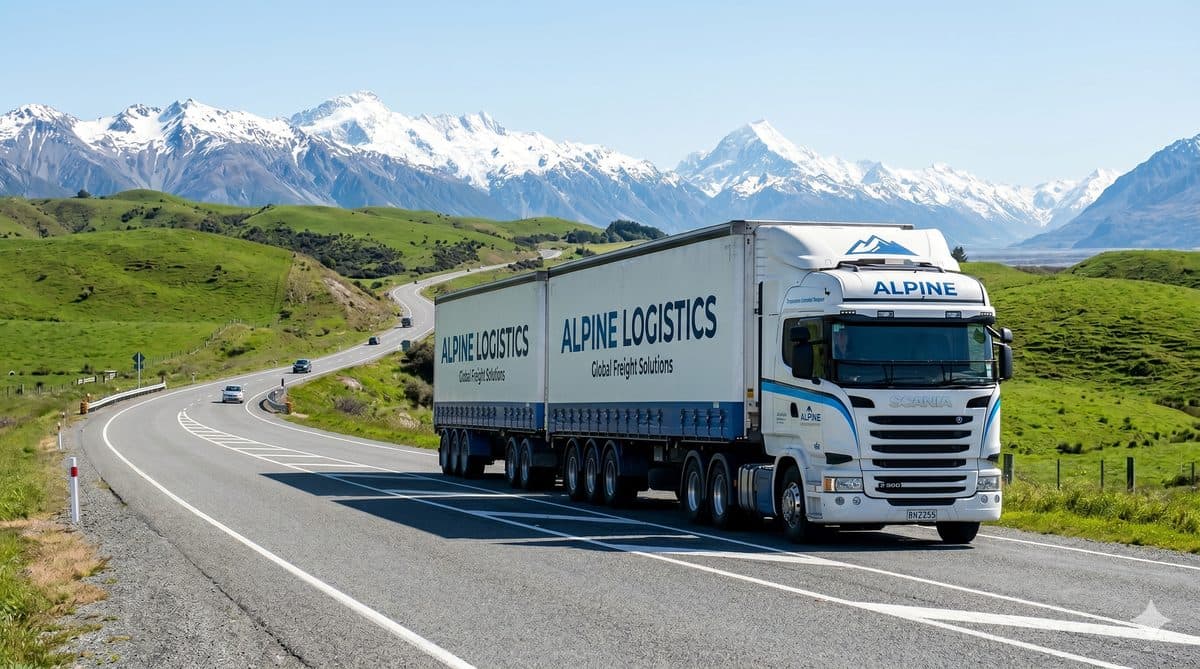
Comprehensive Motor Vehicle Insurance
Agreed-value comprehensive cover for loss or damage to your HGV — whether from accident, fire, theft, storm, flood, or vandalism.
✓ What It Covers
- ✓Accidental collision damage
- ✓Fire and explosion damage
- ✓Theft and attempted theft
- ✓Storm, flood, and weather damage
- ✓Vandalism and malicious damage
- ✓Rollover and ditching recovery costs
- ✓Third-party vehicle damage (at-fault)
- ✓Windscreen and glass (often with nil excess)
- ✓Tow-away and storage costs
✗ What It Excludes
- ✗Wear and tear and mechanical breakdown
- ✗Tyres (unless specific tyre cover added)
- ✗Overloading damage
- ✗Deliberate damage by owner or driver
- ✗Unlicensed driver incidents (if undisclosed)
- ✗Commercial load if not declared
Comprehensive motor vehicle insurance is the foundation of any HGV insurance programme. Without it, a single serious incident — a motorway collision, a rollover in the Mackenzie, a fire in your cab — can write off a vehicle worth hundreds of thousands of dollars and leave you with no income and a finance obligation that does not stop.
Agreed Value vs Market Value — The Critical Decision
This is the single most important choice in your motor vehicle policy, and it is the difference between a fair settlement and a financial catastrophe. Market value policies pay what the insurer determines your vehicle is worth at the time of loss — calculated using depreciation tables, trade guides, and the assessor's judgment. After three or four years of depreciation, a truck you bought for $380,000 may be assessed at $220,000. If replacement costs $310,000, you are $90,000 short.
Agreed value policies pay the amount you and the insurer agree upfront and record in the policy schedule. That figure does not move between renewals. For a working HGV generating revenue every day, agreed value at full replacement cost is not optional — it is the baseline.
The gap between agreed value and market value at claim time has historically been $50,000–$100,000 for mid-aged European prime movers — and that gap grows wider as the replacement market tightens. Since 2022, parts shortages and supply chain disruption have pushed secondhand truck prices significantly higher. A truck that an insurer might value at $180,000 on a market value basis now costs $260,000 to replace in the open market. The agreed value difference is real money.
Discuss replacement cost with your broker at every renewal. If vehicle values have moved — and they have moved substantially in recent years — your agreed value needs to move with them. An agreed value that is 20% below replacement cost at the time of loss still leaves you undercompensated.
Ready to get specialist cover?
Connect with a specialist broker — response within 24 hours.
Certificate of Fitness and Compliance
[Waka Kotahi NZTA](https://transport.govt.nz) requires all heavy vehicles to hold a current Certificate of Fitness (CoF) as a condition of legal road use. CoF inspections are required at six-month or twelve-month intervals depending on vehicle type and age. A vehicle operating without a current CoF is unregistered for practical purposes — and most insurance policies will decline claims that occur when a vehicle is operating outside its legal compliance window.
Make sure your policy is clear on the CoF requirement. If your CoF lapses mid-policy — due to an administrative oversight, a failed inspection, or an inability to get an inspection slot — you need to understand the implications for your cover. Discuss this with your broker proactively.
New-for-Old Replacement and Total Loss Settlement
Some comprehensive policies include new-for-old replacement provisions for recently purchased vehicles — typically those less than two years old or with fewer than 200,000 km at loss time. Under these provisions, a total loss results in replacement with an equivalent new vehicle rather than a cash payment at agreed value. For operators who have recently invested in a new vehicle, this provision has significant value.
Total loss threshold — an insurer declares a vehicle a total loss when repair costs exceed a defined percentage of agreed value (typically 75–80%). When that threshold is crossed, the agreed value settlement is triggered. Understanding this threshold matters: a heavily damaged truck that falls just below total loss threshold may be repaired when a cash settlement would actually serve you better. Discuss the settlement options with your insurer and your broker.
Lead Times for European Trucks — A Real Risk
The current parts supply situation for European trucks — Scania, Volvo, DAF, MAN, Mercedes-Benz — is a genuine insurance risk that many operators underestimate. Major structural components (cab assemblies, engine modules, transmission units) now have lead times of 12–18 months from European manufacturers into the New Zealand market. A truck involved in a serious accident that requires major structural repairs may be off the road for 9–15 months while parts are sourced.
Ready to get specialist cover?
Connect with a specialist broker — response within 24 hours.
This has two insurance implications. First, your agreed value must be high enough to fund a replacement vehicle if the repair timeline is unacceptably long. Second, your downtime cover benefit period must be long enough to cover the actual repair duration — not just a notional 90 days. Discuss both with your broker.
Excess Structures
Every policy has an excess — the amount you contribute when you make a claim. HGV excess structures are typically higher than car insurance: $2,000–$10,000 standard excess is common for heavy vehicles. Some policies apply additional excess for:
- Drivers under 25 or with fewer than two years' experience on heavy vehicles - Specific vehicle types (tankers, logging trucks, heavy haulage) - Named driver restrictions (higher excess if an unlisted driver was operating the vehicle) - Overnight theft claims where the vehicle was not in a secure yard
Electing a higher voluntary excess in exchange for a lower premium can make sense for operators with strong claims histories and the cash flow to absorb an excess payment. For owner-operators with limited reserves, keeping the excess manageable is more important than premium savings.
Windscreen and Glass Cover
Windscreen and glass damage is the most frequent claim type across the HGV fleet. Highway driving puts windscreens at constant risk from stone chips and debris. Most comprehensive policies include windscreen cover — often with nil excess — as a policy extension. Replacement windscreens for European prime movers cost $2,500–$6,000 fitted. Claiming on windscreen cover does not affect your no-claims bonus on most policies.
Ready to get specialist cover?
Connect with a specialist broker — response within 24 hours.
If your policy has a standard excess applying to windscreen claims, ask your broker to add a nil-excess glass extension — the cost is typically modest and the benefit is real.
Hire Vehicle After Accident
Some comprehensive policies include provision for a hire vehicle while your truck is being repaired — covering daily hire costs up to a sub-limit. For owner-operators, this can partially replace lost earnings during the repair period. For fleet operators, it can allow operations to continue at reduced capacity. Check whether your policy includes hire cover, what the daily limit is, and whether it applies to all claim types or only specific covered events.
Multi-Driver Policies and Relief Drivers
If your vehicle is driven by multiple drivers — or if you use relief drivers during illness or holiday periods — make sure your policy covers the relevant driver profiles. Named driver policies restrict cover to listed individuals; open driver policies cover any licensed driver you authorise to operate the vehicle. For operators using relief drivers or running multi-shift operations, open driver cover is typically necessary. Disclose all regular drivers to your broker at inception.
Vehicle Modifications and Declared Equipment
Standard policies cover vehicles as presented at inception. If your vehicle has been modified — a custom refrigerated body, crane or HIAB, fuel tanks, telematics systems, bullbars, additional lighting, or specialist equipment — these must be declared. Undeclared modifications may not be covered in a claim, and in cases where the modification materially affects the risk, undisclosed modifications can void the policy entirely. Tell your broker about every piece of equipment that goes on the truck.
Choosing Your Repairer
When your vehicle is damaged, some comprehensive policies restrict you to the insurer's approved repairer network; others allow you to choose your own repairer. For specialist HGVs — European prime movers, refrigerated vehicles, crane trucks — the choice of repairer matters more than for standard passenger vehicles.
Ready to get specialist cover?
Connect with a specialist broker — response within 24 hours.
An approved repairer network that works primarily on light vehicles or small commercial trucks may not have the expertise, equipment, or parts relationships to repair a damaged Scania or Volvo cab assembly to manufacturer standard. A specialist truck bodybuilder or the brand's own dealer network may deliver a better result — but may not be on the approved list.
Before you need a claim, discuss the repairer choice provision with your broker. If your preferred repairer is not on the approved list, explore whether the insurer will add them — this is a reasonable request for specialist vehicles and most experienced HGV insurers will work with you.
Premium Factors and How to Influence Them
The premium for comprehensive HGV cover is affected by:
Agreed value: Higher agreed value means higher premium — but this is not the place to economise. Under-insuring the agreed value reduces your premium but leaves you under-compensated at claim time.
Driver profile: Age, experience, and accident history of drivers all affect premium. Young or inexperienced drivers attract higher premium or loadings. A driver with a significant at-fault accident history may attract exclusions or non-renewal.
Ready to get specialist cover?
Connect with a specialist broker — response within 24 hours.
Claims history: A clean 3–5 year claims history earns genuine premium reductions at renewal. A history of frequent small claims may trigger a loading or excess increase. Manage small claims actively — consider whether it is worth claiming versus absorbing small losses to protect your claims history.
Vehicle maintenance: Insurers who inspect maintained vehicles or receive telematics data showing proactive maintenance practices offer better terms. The Certificate of Fitness pass rate for your fleet is a useful proxy for insurers assessing maintenance quality.
Telematics: Operators with GPS and driver behaviour monitoring systems in place can demonstrate lower risk profiles. Some insurers offer specific premium discounts for telematics-equipped fleets.
Frequently Asked Questions
What is the difference between agreed value and market value?
Agreed value is the amount both you and the insurer agree your vehicle is worth, locked in at policy inception. Market value is determined at the time of the claim, typically using depreciation tables. For working HGVs, agreed value is strongly recommended — market value can leave you significantly under-compensated.
Does my comprehensive policy cover the trailer as well as the prime mover?
Trailers can be covered on the same policy as the prime mover (as a combined unit) or separately. If you use multiple trailers, or swap trailers between operators, each trailer may need separate cover. Always declare all trailers to your broker.
Am I covered while driving throughout the country?
NZ policies typically cover you throughout the country on public roads. If you operate ferry services to interisland destinations or work in remote off-road areas, discuss these specific situations with your broker to ensure cover applies.
Get a Quote — Comprehensive Cover
Specialist broker response within 24 hours
Other Coverage Types
Not sure what limit you need?
A specialist broker will assess your operation and recommend the right limit for your specific exposure.
Get a Quote