Road Clearing & Reinstatement
Cover for emergency response, road clearing, and infrastructure reinstatement costs following a serious HGV incident on a public road.
✓ What It Covers
- ✓NZTA road clearing and signage charges
- ✓Specialist recovery vehicle hire
- ✓Crane and heavy lift costs
- ✓Road surface reinstatement
- ✓Spillage cleanup (cargo and fluids)
- ✓Emergency response coordinator
- ✓Police and emergency services time
✗ What It Excludes
- ✗Environmental contamination (requires separate cover)
- ✗Criminal fines and penalties
- ✗Wilful or deliberate acts
When a heavy vehicle is involved in a serious incident on a State Highway or major road, the costs of clearing the scene and restoring the road to traffic are substantial — and they are entirely separate from the cost of repairing or replacing your vehicle. Under the Government Roading Powers Act 1989 and related legislation, [Waka Kotahi NZTA](https://transport.govt.nz) and local roading authorities have the right to recover the full cost of incident response and road reinstatement from the responsible vehicle owner or operator.
These invoices arrive weeks or months after the incident — and they can be enormous.
How NZTA Invoicing Works
The invoicing process for a State Highway incident involving a heavy vehicle typically follows this sequence:
Incident response: NZTA's Network Management contractors are activated immediately. Traffic management controllers, barrier trucks, and signage teams are deployed within minutes of a serious incident being reported. Their time and equipment begins accumulating the moment they are dispatched.
Scene management: For serious incidents, an NZTA incident manager may be on scene coordinating traffic management and liaising with emergency services. Their time is recoverable.
Ready to get specialist cover?
Connect with a specialist broker — response within 24 hours.
Specialist recovery: Heavy vehicle recovery on State Highways is typically carried out by NZTA-approved specialist recovery contractors, not standard towing services. These operators carry the equipment required to right and recover HGVs — and their rates reflect the specialist capability.
Road surface assessment and reinstatement: After the vehicle and cargo are cleared, NZTA's road engineers assess the road surface for damage caused by the incident — fuel contamination, mechanical damage from a rolled vehicle, damage from recovery equipment, or contamination from cargo. Repair works are contracted and costs documented.
Invoice: NZTA compiles all costs and issues a formal invoice to the operator. This is a legal debt recovery, not a discretionary charge. It will be pursued.
What These Incidents Actually Cost
The range of road clearing and reinstatement costs varies significantly with incident severity, location, and cargo type. Realistic cost ranges based on the type of incident are:
Minor HGV incidents on rural roads (single lane blocked, vehicle recoverable, no cargo spill, limited road damage): $15,000–$40,000. Traffic management, recovery vehicle, tow, and a few hours of road crew time.
Ready to get specialist cover?
Connect with a specialist broker — response within 24 hours.
Moderate incidents on State Highways (lane closure, vehicle needs specialist recovery, minor cargo spill, road surface damage): $40,000–$80,000. Extended traffic management, specialist crane recovery, cargo cleanup, road surface patching.
Serious incidents on major arterials (multi-lane closure, extended road closure, significant cargo spill, structural road damage): $80,000–$200,000. Long-duration traffic management on a high-volume route is expensive. A lane closure on a busy urban arterial during peak hour costs $3,000–$6,000 per hour in traffic management alone.
Catastrophic incidents (fatal, major State Highway closure, structural damage, hazardous cargo): $200,000–$500,000+. Major SH1 closures have generated NZTA invoices in the $300,000–$400,000 range when all costs are compiled.
The Gap in Standard Motor Vehicle Policies
Most standard motor vehicle policies include a road clearing sub-limit — but it is typically $10,000–$25,000, which is inadequate for anything beyond the most minor rural road incident. If your motor vehicle policy shows a $15,000 road clearing sub-limit and you are involved in a serious motorway incident that generates a $120,000 NZTA invoice, you are paying $105,000 personally.
A specific road clearing extension with a limit of at least $100,000 is the minimum for any HGV running on State Highways. For operators on high-traffic arterials — SH1 between Auckland and Hamilton, the Transmission Gully corridor, SH2 Tauranga approaches — a limit of $250,000–$500,000 is more appropriate given the potential traffic management costs alone.
Ready to get specialist cover?
Connect with a specialist broker — response within 24 hours.
What the Costs Include — A Detailed Breakdown
Understanding what NZTA actually bills for helps you understand why limits need to be generous. A typical invoice may include:
Traffic management: Signs, barriers, traffic controllers (typically $60–$120 per hour per controller, with multiple controllers on multi-lane roads), variable message sign deployment, detour establishment.
Crane recovery: A crane large enough to right and recover a fully laden HGV typically costs $3,000–$8,000 for the crane unit alone, plus mobilisation ($500–$1,500), a certified rigging team ($500–$800 per person), site time (charged by the hour), and disassembly/return costs. Multi-axle heavy haulage incidents may require two cranes.
Specialist recovery vehicles: Rotator recovery trucks, heavy underlift tow trucks, and side-puller winch units add to the crane costs. These units are not standard towing equipment and attract rates of $400–$800 per hour.
Road surface reinstatement: A loadbearing HGV rollover on an asphalt surface can gouge and break the road surface requiring full-depth repair. A 20-metre section of motorway surface repair can cost $40,000–$80,000. Contamination (fuel, oil, chemicals) may require removal of the contaminated pavement layer before reinstatement.
Ready to get specialist cover?
Connect with a specialist broker — response within 24 hours.
Cargo recovery and disposal: Depending on cargo type, disposal may require specialist contractors. Food waste (large-scale), hazardous materials, or goods mixed with road debris require specialist handling.
Logging and Forestry Road Reinstatement
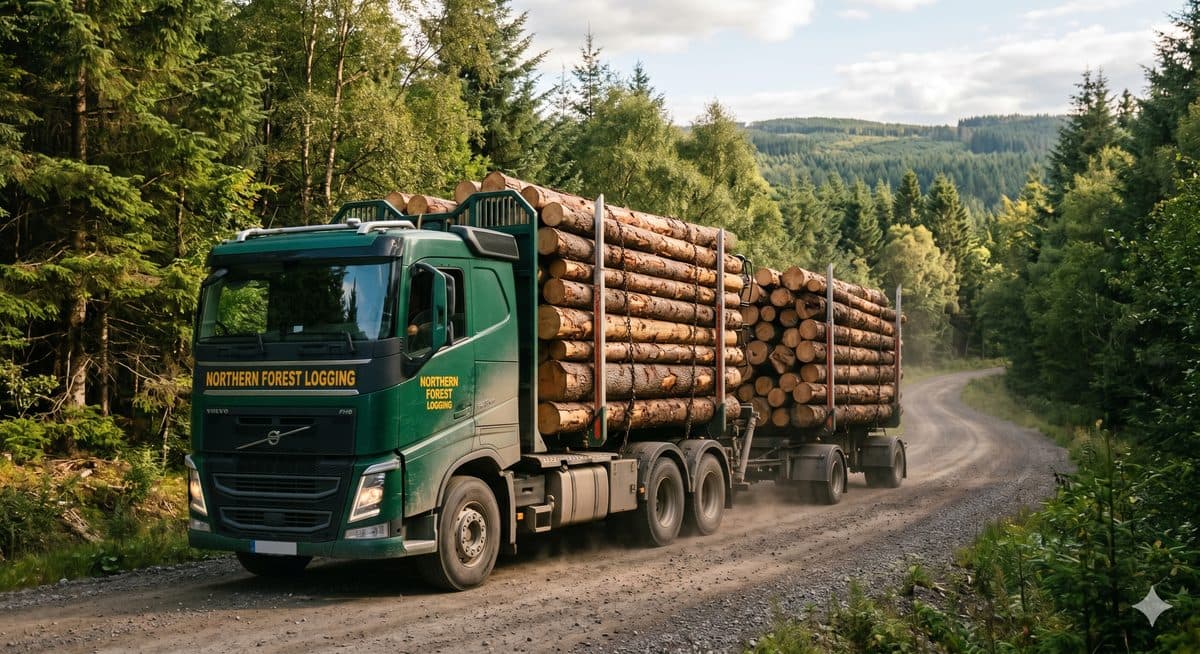
Forestry operators face a specific variant of this exposure: forest road reinstatement liability. The conditions under which logging carriers access forestry blocks typically include obligations to maintain road condition. An incident that damages a forest access road — rutting, surface damage from a rollover, damage to culverts or drainage structures — generates a reinstatement bill from the forest owner or the road manager.
Forest road reinstatement costs are not the same as NZTA State Highway costs, but they can be significant: $20,000–$100,000 for serious road damage on a major access route. Road clearing insurance that explicitly includes forest access roads is essential for logging operators.
Comparing Cover Options
When reviewing road clearing cover, compare:
- Sub-limit within motor vehicle policy: typically $10,000–$25,000. Inadequate. - Road clearing extension added to motor vehicle policy: $100,000–$250,000. Suitable for most operators. - Standalone road clearing and reinstatement policy: $250,000–$500,000. Appropriate for high-exposure operators on major arterials.
Ready to get specialist cover?
Connect with a specialist broker — response within 24 hours.
Your broker can advise on the right structure for your specific routes and vehicle type. The cost difference between a $25,000 sub-limit and a $250,000 road clearing extension is typically modest in premium terms — but the difference at claim time is potentially $225,000.
Claims Handling — Your Insurer's Role
When an incident triggers road clearing charges, your insurer does more than simply pay the invoice. A specialist insurer with genuine HGV experience will:
Contest and negotiate NZTA invoices: NZTA and local authority road clearing invoices are not always accurate or reasonable. Line items may be duplicated, crew hours may be inflated, or reinstatement work may exceed what was actually required by the incident. An insurer experienced in this area will review the invoice systematically, query undocumented charges, and negotiate reductions where costs appear disproportionate. An insurer with no experience in road clearing claims will pay whatever arrives without question — which is not in your interest even when they are paying.
Appoint an incident response coordinator: For major incidents, specialist insurers can arrange an incident response coordinator who attends the scene promptly, liaises with NZTA and emergency services, manages media contact (important for serious incidents with public interest), and documents the scene carefully for the subsequent claims and liability process. Early professional involvement on scene reduces both the ultimate cost of the incident and the time the road is closed.
Manage the timeline: NZTA invoices typically arrive 6–12 months after a serious incident. Your insurer holds a reserve against the expected invoice amount from the day of the incident. Managing this reserve accurately — neither releasing it prematurely nor holding excessive capital tied up in the claim — is part of good claims management. Ask your broker about the typical timeline for road clearing claims resolution and how your insurer manages the process.
Ready to get specialist cover?
Connect with a specialist broker — response within 24 hours.
Preventive Measures That Reduce Your Exposure
Road clearing cover is the financial safety net — but reducing the incidents that trigger it is the primary goal. Practical measures that reduce road clearing exposure include:
Load security discipline: The majority of cargo-related road incidents are preventable through proper load restraint. Complying with the Code of Practice for Load Restraint — correct number of restraints, correct rating, correctly positioned — reduces the frequency of load shifts that become incidents.
Vehicle maintenance: A well-maintained braking system, correctly adjusted air brakes, and properly inflated tyres are the difference between a controlled stop and a runaway incident on a steep grade. Tyre blowouts at highway speeds are a common cause of loss-of-control incidents that result in major road clearing events.
Route planning for hazardous conditions: Ice, heavy rain, and wind-affected sections of State Highways are predictable hazards. Operators who plan routes and timing around known weather risks — and who have clear policies about when drivers can exercise professional judgment to delay a trip — reduce the incident frequency on hazardous sections.
Frequently Asked Questions
Is road clearing cover included in my motor vehicle policy?
Some policies include a basic road clearing sub-limit, but it is typically $10,000–$25,000 — insufficient for a serious highway incident. A specific road clearing extension with a $100,000+ limit is recommended for all HGV operators on public roads.
Who invoices me for road clearing costs?
NZTA issues invoices for incidents on State Highways. Local councils or roading authorities invoice for incidents on local roads. The charges arrive weeks or months after the incident. Your insurer handles payment and negotiation of these charges on your behalf.
Get a Quote — Road Clearing
Specialist broker response within 24 hours
Other Coverage Types
Not sure what limit you need?
A specialist broker will assess your operation and recommend the right limit for your specific exposure.
Get a Quote