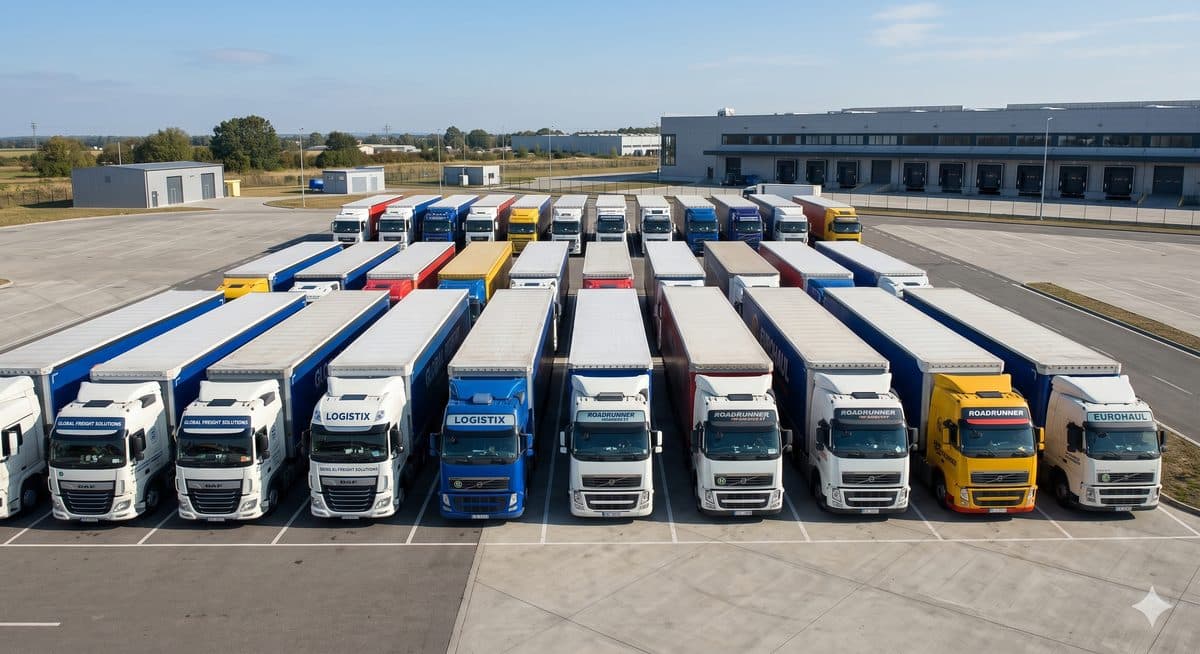
Construction & Civil Works Insurance
Tipper trucks, crane trucks, concrete mixers, and heavy haulage supporting civil construction and infrastructure projects across the country.
Coverage Needs for This Sector
Vehicle Types in This Sector
Construction sites are complex, high-activity environments where multiple operators, trades, and vehicles work in close proximity under time pressure. For truck operators supporting civil construction projects — delivering aggregate, operating crane trucks, running tipper loads on major infrastructure sites — the insurance programme must address both the vehicle risks and the specific liabilities of site-based operations.
The Construction Pipeline — Why This Sector Matters
Several major drivers are sustaining construction sector demand for heavy vehicle services:
Auckland housing shortage: The Auckland housing shortage — estimated at 40,000–60,000 dwellings — continues to drive residential development at scale. Earthmoving, aggregate haulage, concrete delivery, and site preparation services are in sustained demand across the Auckland fringe and established suburbs. Tipper trucks and concrete mixers working on residential construction sites navigate constrained urban environments with pedestrians, cyclists, and passenger vehicles in close proximity.
Infrastructure investment: The National Land Transport Programme and specific infrastructure projects — road, rail, water, and electricity network upgrades — are generating large-scale demand for heavy civil plant and transport. Motorway projects, Wellington seismic upgrades, Christchurch rebuild work (still ongoing), and Three Waters infrastructure all require tipper trucks, concrete mixers, and heavy haulage vehicles.
Canterbury rebuild context: The Canterbury rebuild following the 2010–2011 earthquake sequence is now in its second decade, with ongoing seismic upgrade work on commercial buildings and infrastructure that continues to drive construction vehicle demand across Christchurch and the wider Canterbury region.
Ready to get specialist cover?
Connect with a specialist broker — response within 24 hours.
Wellington seismic work: Wellington's earthquake-prone building programme — requiring seismic strengthening or demolition of a significant proportion of the commercial building stock — is generating sustained construction activity with associated transport demand.
Site Operations vs Road Operations — A Critical Policy Distinction
Transport operators working on construction sites have two distinct operating environments, and the insurance distinction between them matters:
Road operations: Driving to and from the site on public roads. Your motor vehicle policy covers this without specific extension.
Off-road and site operations: Operating within site boundaries — driving on unsealed ground, operating in active excavation zones, tipping in cut/fill areas, positioning a crane or HIAB within a construction site. Some policies restrict cover to road use and exclude off-road or site operations.
If you work within site boundaries, make sure your policy explicitly covers site operations. The exclusion of off-road operations is not always obvious from the policy schedule — it may be in a policy condition or exclusion clause that requires careful reading. Discuss this with your broker and get written confirmation of site operations cover.
Ready to get specialist cover?
Connect with a specialist broker — response within 24 hours.
Third-Party Property Damage on Constrained Urban Sites
Working in constrained urban environments creates third-party property damage exposure that is higher than typical rural or highway operations. Specific scenarios:
Tipper truck movements on urban sites: Reversing, manoeuvring, and tipping in tight spaces near existing structures, boundary walls, and neighbouring properties. Damage to boundary fences, landscaping, and adjacent structures during manoeuvring is a common claim type.
Aggregate and spoil loads on public roads: Aggregate falling from tipper trucks on public roads creates windscreen damage to following vehicles — a high-frequency claim event. Load security standards are mandatory under the Land Transport Rule: Vehicle Standards Compliance 2002 and the Code of Practice for Load Restraint.
Concrete mixer operations: Concrete spills during wash-out or transit create property damage and environmental contamination on public roads and adjacent properties. Concrete wash-out water is alkaline and can damage vegetation and waterways.
Crane operations near existing structures: HIAB and crane operations in urban areas involve lifting loads over or adjacent to existing buildings, power lines, and pedestrian areas. A load failure or swing event in this environment can cause catastrophic property damage and injury liability.
Ready to get specialist cover?
Connect with a specialist broker — response within 24 hours.
Load Security on Public Roads
The Land Transport Rule: Vehicle Standards Compliance 2002 requires all loads on public roads to be secured to prevent movement, falling, or projection. For tipper trucks, aggregate loads must be netted or fully contained. For crane trucks and hiabs, loads must be properly rigged and restrained for road transit.
[WorkSafe NZ](https://worksafe.govt.nz) enforces load restraint obligations and has prosecuted operators for load restraint failures that created risk to other road users. A load restraint failure that results in an incident creates simultaneous public liability exposure and a potential WorkSafe investigation — with statutory liability insurance covering the investigation costs and any resulting fines.
Night Haulage Permits and Oversized Loads
Heavy civil construction projects often require oversize and overdimension load movements — large concrete elements, structural steel, piling rigs, and specialist plant. These movements require NZTA oversize load permits and often involve night haulage to avoid traffic disruption.
Night haulage of oversize loads requires a pilot vehicle (or multiple pilots), specific lighting and marking requirements, and NZTA route approval. Your insurance must cover the full movement profile — including the pilot vehicle (if owned) and any specific conditions attached to the movement permit.
Sub-Contractor Insurance Compliance
Principal contractors on major civil and infrastructure projects routinely require sub-contractors — including transport operators — to carry minimum insurance as a condition of engagement. Typical requirements:
Ready to get specialist cover?
Connect with a specialist broker — response within 24 hours.
- Comprehensive vehicle insurance at full replacement value (agreed value) - Public liability of $5,000,000–$10,000,000 minimum - Employers liability - Statutory liability - Sometimes professional indemnity (for operators who also provide project management or design input)
These requirements are specified in the sub-contractor agreement and must be met before you start work. Your broker can review your contract and confirm whether your current programme meets the requirements. Not meeting the requirements before you sign can mean being stood down from the project — a serious commercial consequence.
Crane and Lifting Operations — Compliance Requirements
Crane trucks and HIAB-equipped vehicles operating on construction sites have specific compliance requirements under WorkSafe NZ. Key requirements include:
Operator competency: Operators of cranes with rated load exceeding 10 tonnes must hold relevant competency certificates (WorkSafe engineering lifts certificates or equivalent). Operating without the required certification is a WorkSafe breach.
Lift planning: The Health and Safety at Work (General Risk and Workplace Management) Regulations require lift planning for complex lifts — documenting load weights, rigging plans, exclusion zones, and emergency procedures. Inadequate lift planning contributes to a high proportion of crane incidents.
Ready to get specialist cover?
Connect with a specialist broker — response within 24 hours.
Exclusion zones: Designated exclusion zones around crane operations must be established and enforced. Bystanders and other workers entering the exclusion zone during a lift create both safety risk and public liability exposure.
Non-compliance with lifting requirements can void insurance cover and expose individual operators to personal liability under the HSW Act.
Contract Works Interface
Construction transport operators work alongside contract works policies held by the principal contractor. A contract works policy insures the project works in progress — the structure being built, earthworks completed, and materials on site — against damage during the construction period. This is the principal's insurance, not the sub-contractor's.
If your vehicle damages the works during operations — your hiab knocks a structural element, your tipper reverses into completed formwork, your concrete mixer contaminates a finished floor — the resulting claim may come to you rather than through the principal's contract works policy. Your public liability policy is the response mechanism for these scenarios.
Understanding the interface between the principal's contract works policy and your public liability avoids coverage gaps at claim time. Ask your broker to clarify the position when reviewing a new principal contract.
Ready to get specialist cover?
Connect with a specialist broker — response within 24 hours.
The Construction Sector Cycle — Managing Inactive Periods
The construction sector is cyclical. Major project completions, budget freezes, or economic downturns can leave vehicles standing idle for extended periods. If your HGVs are going to be stood down for more than 30 days, discuss this with your insurer: many policies include provisions for temporarily reduced cover on inactive vehicles during lay-up periods. This can reduce premium costs during quiet periods — but the cover reduction must be formally agreed with the insurer and properly documented. An informal assumption that the vehicle is "laid up" without formal notice to the insurer is not sufficient.
When the vehicle returns to service, full cover must be reinstated before it goes back on the road.
Tipper Trucks — The Specific Risk Profile
Tipper trucks are among the most claim-prone vehicle types in the HGV sector. The combination of frequent manoeuvring in tight spaces, aggregate loads that create stone chip claims, tipping instability on uneven ground, and the physical wear of tipping operations creates a high-frequency claims profile.
Key tipper-specific risks and their management:
Tipping instability: A tipper body raised on uneven or sloping ground creates rollover risk. Tipping on level ground is a non-negotiable operational requirement. Tipping without stabilising the load (allowing the body to twist or shift under partial load discharge) is a known rollover cause.
Ready to get specialist cover?
Connect with a specialist broker — response within 24 hours.
Load security on public roads: Aggregate, spoil, and demolition material loads must be netted or enclosed before road travel. Failure to net a tipper load is a regulatory breach and creates public liability exposure from stone chip and falling debris claims.
Site access damage: Tippers operating on active civil sites drive over varying surface conditions — soft ground, steel decking, concrete with protruding rebar. Undercarriage and tyre damage from site conditions is a common claim type. Confirm that your policy covers site operations, not just road use.
Tipper operators benefit from regular discussion with their broker about claims patterns — identifying the most frequent claim types and addressing them through operational changes rather than simply claiming repeatedly.
Industry Bodies & Associations
Industry body for civil construction contractors. Insurance requirements for members operating as subcontractors to principals.
Health and safety information and training for the construction sector.
Frequently Asked Questions
Do I need to check my insurance before signing a subcontract agreement?
Yes — always review the insurance requirements in a subcontract before you sign. Principal contractors increasingly audit sub-contractor insurance certificates, and being unable to produce adequate insurance can mean being stood down from the project.
Is my truck covered while working inside a construction site?
Only if your policy includes off-road or site operations cover. Standard road-use policies may not cover incidents occurring within site boundaries on unsealed ground. Declare your site work to your broker and confirm cover applies.
Get a Construction Quote
Specialist broker response within 24 hours
Sector-specialist brokers
Compare the brokers who specialise in construction insurance programmes.
Compare Brokers