Freight & Logistics Insurance
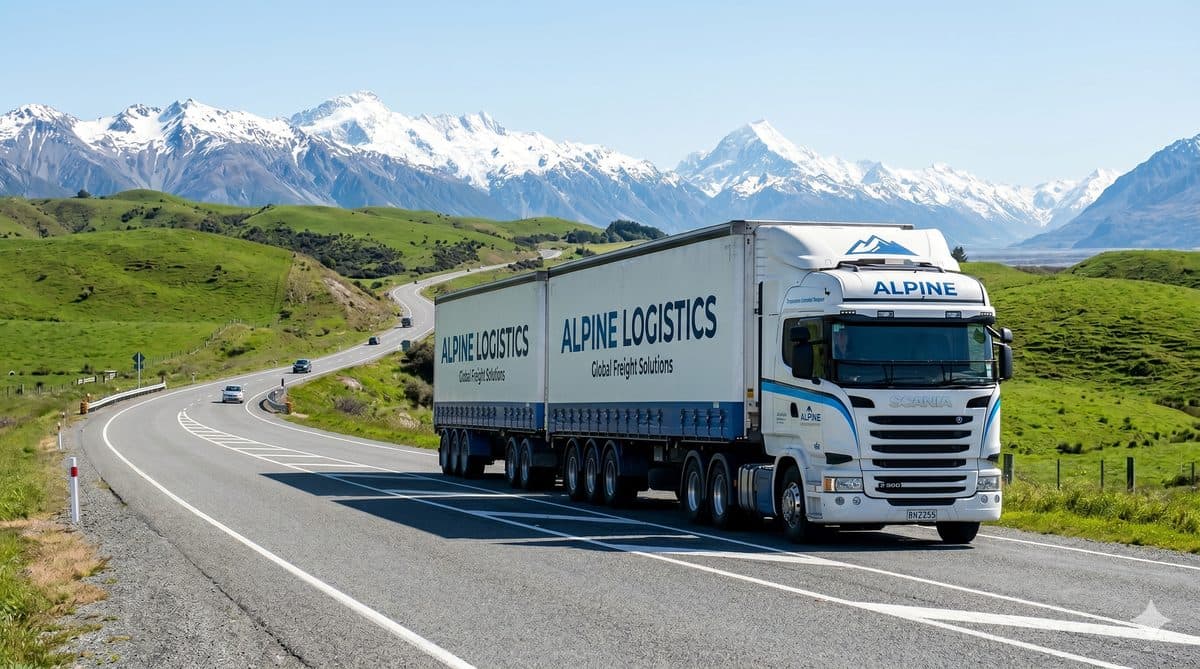
General freight, express parcel delivery, pallet freight, and 3PL logistics operators running artics and rigid trucks on the national highway network.
Coverage Needs for This Sector
Vehicle Types in This Sector
The freight and logistics sector is the circulatory system of the economy. Every manufactured product, piece of produce, building material, and retail item that moves between producers and consumers does so on the back of a truck. The operators running those trucks — from large national carriers to solo owner-operators on fixed contract routes — need insurance that matches the scale, complexity, and risk profile of their operations.
The Structure of the Freight Sector
The sector encompasses an enormous range of businesses. At one end: large national carriers running 200+ vehicle fleets across both islands, operating dedicated linehaul artics, rigid local delivery trucks, and refrigerated vehicles for temperature-sensitive freight. Operators in this category include household names in the domestic freight market — Mainfreight, Toll, DHL, and a number of large regional carriers — operating across the full SH1 corridor from Invercargill to Whangarei.
At the other end: solo owner-operators with a single artic running a fixed contract route for a principal carrier. Between these extremes sits a large middle tier of regional operators, 3PL logistics businesses, and specialist freight companies serving particular commodity sectors (bulk goods, project freight, dangerous goods, temperature-controlled).
The insurance needs differ in scale — a 200-vehicle fleet has different structures from a single truck — but the fundamental covers are the same: comprehensive motor vehicle, carriers liability, public liability, and downtime cover. The complexity is in calibrating each to the specific operation.
The SH1 Corridor and Port of Tauranga
The backbone of the freight network is the SH1 corridor running the length of the North Island, connecting Auckland (the primary import/export gateway), Hamilton (central manufacturing and distribution), Tauranga (the Port of Tauranga, the busiest container port in the country by volume), and points south to Wellington.
Ready to get specialist cover?
Connect with a specialist broker — response within 24 hours.
The Port of Tauranga connection is particularly significant for freight operators. The port handles approximately 30% of the country's international container trade — a large proportion of import containers moving inland to Auckland warehouses and manufacturing centres are carried by road from Tauranga. The SH29 Kaimai route and the Te Rapa interchange are key freight chokepoints. Operators running this corridor face high traffic density, complex lane configurations, and the time pressure of port schedules and vessel ETAs.
Auckland congestion is a persistent operational challenge. The Auckland motorway network — SH1, SH16, SH20, and the connection routes — carries the highest truck density of any roading environment in the country. Incident rates are elevated compared with regional routes, and the cost of incidents (in terms of time, traffic management, and third-party vehicle damage) is higher given the traffic density.
Carriers Liability — The Core Freight Cover
Carriers liability is non-negotiable in the freight sector. Every general freight operator is legally responsible for the goods in their care under the Contract and Commercial Law Act 2017. If a consignment is lost, damaged, or stolen while in your care — whether you were negligent or not, in a road carrier's risk contract — the freight owner can hold you legally liable.
The appropriate limit depends on the value of the freight you typically carry. General freight operators running palletised goods, building materials, and packaged goods typically need $500,000–$1,000,000 per load. Operators carrying high-value electronics, pharmaceuticals, or specialty goods need higher limits — up to $2,000,000 or beyond for individual loads.
Backload risk is a specific consideration in freight insurance. Backload freight — cargo accepted at short notice to fill a return trip — may be from unfamiliar customers with unfamiliar goods. The value and nature of backload cargo may be less well-known than your regular contract freight. Disclose your backloading practices to your broker and confirm that your carriers liability limit is adequate for the highest-value backload you might realistically carry.
Ready to get specialist cover?
Connect with a specialist broker — response within 24 hours.
Fuel Levy Pass-Through and Insurance Valuation
The fuel levy pass-through arrangement — where operators add a variable fuel cost component to freight rates — affects the gross revenue value of freight contracts. From an insurance perspective, the relevant figure is the insured value of the cargo, not the freight rate. Make sure your carriers liability limit reflects the cargo value your customers declare, not the freight rate you charge.
For operators who are also responsible for arranging freight insurance on behalf of customers (as part of a logistics management service), the insurance arrangement must be explicit and declared. Some carriers liability policies extend to cover the value of goods for which the operator has accepted insurance responsibility — this requires specific discussion with your broker.
Owner-Operator Subcontractors — The Insurance Chain
The freight sector makes extensive use of owner-operator subcontractors. A principal carrier accepts a freight contract, then subcontracts the physical movement to an owner-operator who provides their own vehicle. This structure creates an insurance chain that must be managed carefully.
The principal carrier is liable to the freight customer under the contract. If the subcontractor's vehicle or driving causes the loss or damage, the principal carrier is still liable to the freight customer — and must then pursue the subcontractor. This works only if the subcontractor has adequate insurance.
[Transporting NZ](https://transportingnz.org.nz) and the [National Road Carriers Association](https://natroad.co.nz) both recommend that sub-contracting agreements specify minimum insurance requirements — typically including carriers liability of $500,000–$1,000,000, public liability of $2,000,000–$5,000,000, and comprehensive motor vehicle cover at agreed value. As a principal carrier, verifying sub-contractor insurance compliance before engagement is a risk management standard, not an optional courtesy.
Ready to get specialist cover?
Connect with a specialist broker — response within 24 hours.
Telematics, Fleet Management, and Insurance Outcomes
Insurers increasingly reward freight operators who use telematics systems — GPS tracking, driver behaviour monitoring, hours-of-service compliance, and vehicle diagnostics. The data from these systems has multiple insurance benefits:
Claims resolution: Telemetry data from a vehicle at the time of an incident can reconstruct the incident — speed, braking pattern, GPS location, steering inputs — that helps resolve liability disputes and speeds up claims settlement.
Fraud reduction: Exaggerated or fraudulent claims are harder to sustain when telemetry data contradicts the claimed version of events.
Premium negotiation: Operators who can demonstrate low incident rates, good driver behaviour scores, and proactive vehicle maintenance through telematics data have leverage at renewal. Insurers who can quantify your risk profile offer better terms than those who have to price for the unknown.
Association Programmes — Access for Members
Both [Transporting NZ](https://transportingnz.org.nz) and the [National Road Carriers Association](https://natroad.co.nz) have preferred insurance programmes for their members. These programmes are designed specifically for road transport operators and include coverage extensions, competitive pricing, and insurer relationships built on genuine sector understanding.
Ready to get specialist cover?
Connect with a specialist broker — response within 24 hours.
Membership in the relevant association is worth exploring independently of insurance — both bodies provide advocacy, compliance support, training, and industry intelligence that have real value for operators of all sizes.
Fleet Policy Structure — Efficiency at Scale
As a freight operator grows from a small fleet to a larger one, the policy structure matters as much as the coverage. A well-structured fleet policy provides:
Single renewal date: All vehicles renew together — eliminating the administrative burden of staggered policy management and ensuring consistent coverage across the fleet at all times.
Blanket agreed values: Rather than agreeing individual values for each vehicle at inception, a fleet policy may use a blanket value basis (fleet declared value) that allows vehicles to be added, removed, or revalued throughout the year without policy endorsement for each change. This matters in a sector where vehicles are bought, sold, and repositioned regularly.
Fleet claims history: Insurers assess fleet risks on the basis of the whole-of-fleet claims experience over 3–5 years. A fleet with a strong claims record — low frequency, low severity — earns genuine premium savings at renewal. A fleet with poor claims history pays more. The commercial incentive to invest in driver training, telematics, and vehicle maintenance is directly visible in the fleet renewal premium.
Ready to get specialist cover?
Connect with a specialist broker — response within 24 hours.
Multi-cover bundling: Fleet motor vehicle, carriers liability, public liability, statutory liability, and employers liability can often be packaged under a single freight transport programme with a single broker, single insurer relationship, and coordinated claims handling. This eliminates coverage gaps between separate policies and simplifies the annual renewal process.
Managing Seasonal and Cyclical Freight Demand
The freight sector experiences seasonal peaks — Christmas and Easter retail freight, harvest season agricultural produce, construction material peaks in summer. Managing fleet capacity during peak periods — adding vehicles through lease, owner-operator sub-contracting, or additional purchases — must be reflected in your insurance.
Communicate fleet changes to your broker promptly. Adding an uninsured vehicle to your fleet for a busy period — even temporarily — creates uninsured exposure. Most fleet policies can accommodate temporary additions on a declared basis, often without formal endorsement if the addition is within agreed parameters.
Industry Bodies & Associations
Industry body for road transport operators (formerly RTANZ). Gallagher NZ (AJG) preferred insurance programme.
Represents truck operators on roading and regulatory matters. Marsh NZ preferred insurance programme.
Frequently Asked Questions
Do I need separate insurance for each truck in my fleet?
No — a fleet policy covers all your vehicles under a single policy with one renewal date, one premium calculation, and one claims process. Fleet policies are available from three vehicles upward and become increasingly cost-effective as the fleet grows.
My subcontractors use their own trucks — do I need to insure them?
Subcontractors should carry their own vehicle insurance, carriers liability, and public liability. As a principal carrier, you should verify that subcontractors have adequate insurance as a condition of engagement. Some principal liability extends to cover sub-contractors — discuss this with your broker.
Get a Freight & Logistics Quote
Specialist broker response within 24 hours
Sector-specialist brokers
Compare the brokers who specialise in freight & logistics insurance programmes.
Compare Brokers