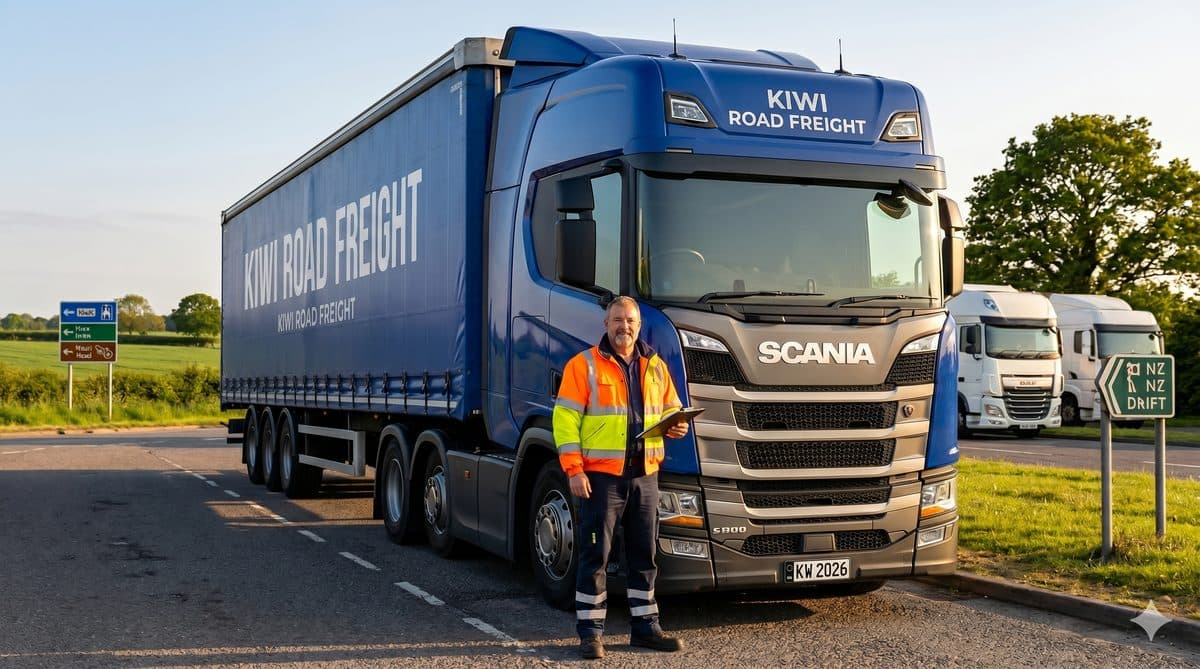
Downtime & Loss of Use
Daily benefit payments while your HGV is off the road for covered repairs — keeping your cash flow intact when income stops.
✓ What It Covers
- ✓Daily benefit during vehicle repair period
- ✓Hire vehicle costs (alternative transport)
- ✓Fixed operating costs during downtime
- ✓Revenue loss for owner-operators
✗ What It Excludes
- ✗Scheduled maintenance downtime
- ✗Mechanical breakdown (unless insured event)
- ✗Driver incapacity (covered by personal accident)
- ✗Downtime beyond maximum benefit period
A working HGV generates revenue every day it runs. When it is off the road — for repairs after an accident, waiting for parts, or being assessed by a loss adjuster — that revenue stops. Fixed costs do not: finance repayments, lease obligations, insurance premiums, and staff costs continue regardless of whether the truck is earning. Downtime cover addresses this gap.
The Parts Delay Crisis — Why Downtime Is Longer Than It Used to Be
The road transport industry is experiencing a parts supply crisis that has fundamentally changed the risk profile of major vehicle damage claims. Post-Covid supply chain disruption, manufacturer capacity constraints, and shipping lead times mean that major components for European trucks now take 12–20 weeks to arrive in this market — and in some cases longer.
Brands most affected include Scania, Volvo, DAF, MAN, and Mercedes-Benz — which collectively make up a large proportion of the heavy vehicle fleet. A Scania R-series with a damaged cab structure may require cab components that are not stocked in Australasia and must be ordered directly from the European factory. A Volvo FH with a written-off front axle and engine damage may wait 4–6 months for parts.
For an owner-operator with a single vehicle on finance, 4–6 months off the road is not an inconvenience — it is an existential crisis. Finance payments do not pause while your truck waits in a repair workshop.
For a small fleet operator, one vehicle out of four sitting idle for five months reduces earning capacity by 25% for the quarter — a serious cash flow problem if the contract obligations of the remaining three trucks cannot carry the cost of the idle fourth.
Ready to get specialist cover?
Connect with a specialist broker — response within 24 hours.
Downtime cover was always important. In the current parts environment, it has become critical.
What Downtime Cover Actually Pays
A downtime policy pays a fixed daily benefit for each day your vehicle is off the road due to a covered insured event. The benefit is agreed at policy inception and recorded in the schedule — typically expressed as a daily rate and a maximum benefit period.
The daily payment covers: - Finance repayments on the vehicle - Insurance premiums (which continue regardless of vehicle status) - Lease or contract hire obligations - Contribution to fixed overhead costs (admin, yard costs, management time) - For owner-operators: personal living expenses during the repair period
The cover does not replace your motor vehicle claim (which funds the repair or replacement) — it supplements it by bridging the income gap during the period the repair is being completed.
Daily Revenue Calculations for HGV Operators
Setting the right daily benefit requires an honest calculation of your net daily revenue. The formula is straightforward:
Ready to get specialist cover?
Connect with a specialist broker — response within 24 hours.
Gross daily revenue (contract rate or average daily billings) minus daily variable costs (fuel, driver wages, load-specific costs) equals net daily revenue (the figure you lose when the truck stops earning).
For an articulated B-train operator running bulk freight on a fixed contract, gross daily revenue might be $4,500–$6,000. Variable costs (fuel: $800–$1,200; driver wages: $350–$500) reduce this to a net figure of $2,800–$4,000. That is the downtime benefit you need.
For an owner-operator running a rigid truck on local deliveries, the figures are smaller: gross daily revenue $1,200–$1,800, variable costs $300–$500, net daily benefit needed $800–$1,300.
Your accountant can calculate an accurate net daily revenue figure from your financial records. Do not guess — both over-insuring (premiums become disproportionate) and under-insuring (the benefit does not cover your obligations) are costly mistakes.
Finance Payment Obligations During Downtime
If your vehicle is on a chattel mortgage, finance lease, or hire purchase agreement, the lender's priority is their loan — not your cash flow situation. Finance payments continue on schedule whether the truck is earning or not. A $250,000 vehicle on a 60-month commercial finance agreement carries monthly payments of approximately $4,800–$5,500. Over a five-month downtime period, that is $24,000–$27,500 in finance obligations with no income to service them.
Ready to get specialist cover?
Connect with a specialist broker — response within 24 hours.
Downtime cover directly addresses this exposure. When you calculate your required daily benefit, include your daily finance cost as a floor — the minimum benefit that allows you to meet your financial obligations without drawing on reserves or borrowing.
Sub-Contract Hire Rates During Downtime
For fleet operators and owner-operators under contract, downtime may require sub-contracting the affected work to another carrier to maintain contractual obligations. Sub-contract hire rates for HGVs in this market currently run at:
- Rigid truck (8–14 tonne GVM): $800–$1,400 per day including driver - Artic prime mover and trailer: $1,800–$3,000 per day including driver - Specialist vehicles (crane trucks, tankers, refrigerated): $2,500–$5,000+ per day
If your downtime cover includes a sub-contract or replacement vehicle cost extension, these rates are recoverable. If it does not, the sub-contract cost comes from your pocket — often on top of lost profit margin from the original contract.
Benefit Period — 90 Days Is Not Always Enough
Downtime policies have a maximum benefit period — the maximum number of days they will pay. 90 days is the most common standard limit; 180 days is available for specialist vehicles and from some insurers.
Ready to get specialist cover?
Connect with a specialist broker — response within 24 hours.
Given current parts lead times for European trucks, 90 days may not be sufficient for a vehicle requiring major structural repairs or component replacement. A vehicle with major cab damage may not be back on the road in 90 days. Before accepting a standard 90-day benefit period, ask your broker whether a 180-day period is available for your vehicle make and type, and what the additional premium cost is — it may be modest relative to the benefit.
Interaction with Motor Vehicle Settlement
When a vehicle is written off as a total loss and the agreed value is paid, downtime cover typically ceases — because the vehicle has been settled and the proceeds are available to purchase a replacement. However, if finding and purchasing a comparable replacement vehicle takes time (and in the current market, it can take weeks to months to source a comparable secondhand European prime mover), there may be a gap between the total loss settlement and the replacement vehicle being operational. Some policies address this with a post-settlement grace period — check whether yours does.
Downtime Cover and Contract Obligations
For operators running under fixed-rate transport contracts, being off the road does not automatically release you from delivery obligations. If your contract does not include a force majeure or mechanical failure escape clause, you may be required to sub-contract the work to maintain service — at a cost that exceeds your contract rate.
Sub-contracting a replacement vehicle and driver in the current market costs $1,800–$3,000 per day for an artic combination. If your contract rate is $2,500 per day and the sub-contract cost is $2,700, you are losing $200 per day — plus your fixed costs. Downtime cover that includes a sub-contract cost extension can recover the difference between your contracted rate and the cost of sub-contracting the work.
If your contract includes penalty clauses for late or failed delivery, the exposure is greater still. Review your transport contracts with your broker — understanding which contracts include delivery performance obligations helps determine the right structure and level of downtime cover.
Ready to get specialist cover?
Connect with a specialist broker — response within 24 hours.
Practical Claims Steps
When your vehicle is off the road for a covered reason:
Notify your insurer immediately — downtime cover typically requires notification within a defined period (24–72 hours of the vehicle going off the road). Late notification can result in the benefit not being payable for the delay period.
Obtain a repair timeline from the workshop — the insurer will want a written estimate of the repair duration from the repairing workshop. This estimate triggers the benefit period and establishes the expected return-to-service date.
Document your daily revenue — keep records of your normal daily billing during the downtime period. If there is any dispute about the benefit entitlement, your revenue records provide the documentary basis for the claim.
Keep the insurer updated on delays — if the repair takes longer than originally estimated (due to parts delays or additional damage found during repairs), notify your insurer promptly. Most policies will extend the benefit period for genuine delays not caused by the operator.
Ready to get specialist cover?
Connect with a specialist broker — response within 24 hours.
Downtime Cover vs Mechanical Breakdown Insurance
A common point of confusion: downtime cover pays when the vehicle is off the road due to an insured event — typically an accident, collision, or other covered incident under the motor vehicle policy. It does not pay for mechanical breakdown.
Mechanical breakdown insurance (MBI) is a separate product that covers the cost of repairing a vehicle that breaks down due to a mechanical or electrical failure — and some MBI products also include a downtime or loss-of-use component. For owner-operators and high-mileage fleet operators, MBI combined with accident downtime cover provides a more complete income protection package.
The two products are complementary. An owner-operator who has both covers is protected whether the truck stops earning due to an accident (downtime cover responds) or a gearbox failure (MBI responds). An operator with only one cover has a significant gap — and in high-mileage operations, mechanical breakdowns are at least as likely as accidents as a cause of extended downtime.
Ask your broker to present both options at renewal if you do not already have MBI in place.
Frequently Asked Questions
How is the daily downtime benefit calculated?
You set the daily benefit amount when you take out the policy, up to the maximum the insurer will offer. The benefit should reflect your actual net daily revenue from the vehicle. Your insurer will pay this amount for each day the vehicle is genuinely off the road for covered repairs.
Does downtime cover pay if I'm off the road due to a breakdown rather than an accident?
Standard downtime cover pays when the vehicle is off the road due to an insured event — typically an accident or collision. Mechanical breakdown cover is a separate product. If you want protection against both accidents and breakdowns, you need both covers.
Get a Quote — Downtime Cover
Specialist broker response within 24 hours
Other Coverage Types
Not sure what limit you need?
A specialist broker will assess your operation and recommend the right limit for your specific exposure.
Get a Quote