Hamilton HGV Insurance
Hamilton sits at the heart of the Waikato — New Zealand's dairy belt — making it a major hub for milk tanker operations, livestock transport, and general freight on the SH1 corridor.
🏭 Key Industries
- ✓Dairy logistics
- ✓Livestock transport
- ✓General freight (SH1)
- ✓Agricultural supplies
🛣️ Key Routes
Hamilton is the freight capital of Waikato — and Waikato is the beating heart of New Zealand's dairy industry. The Fonterra cooperative's largest processing facilities are clustered in and around the Waikato region, and the milk collection network that feeds them covers hundreds of thousands of kilometres of rural roads every year. For heavy vehicle operators based in or around Hamilton, dairy logistics, livestock transport, and SH1 corridor freight are the defining activities of the market.
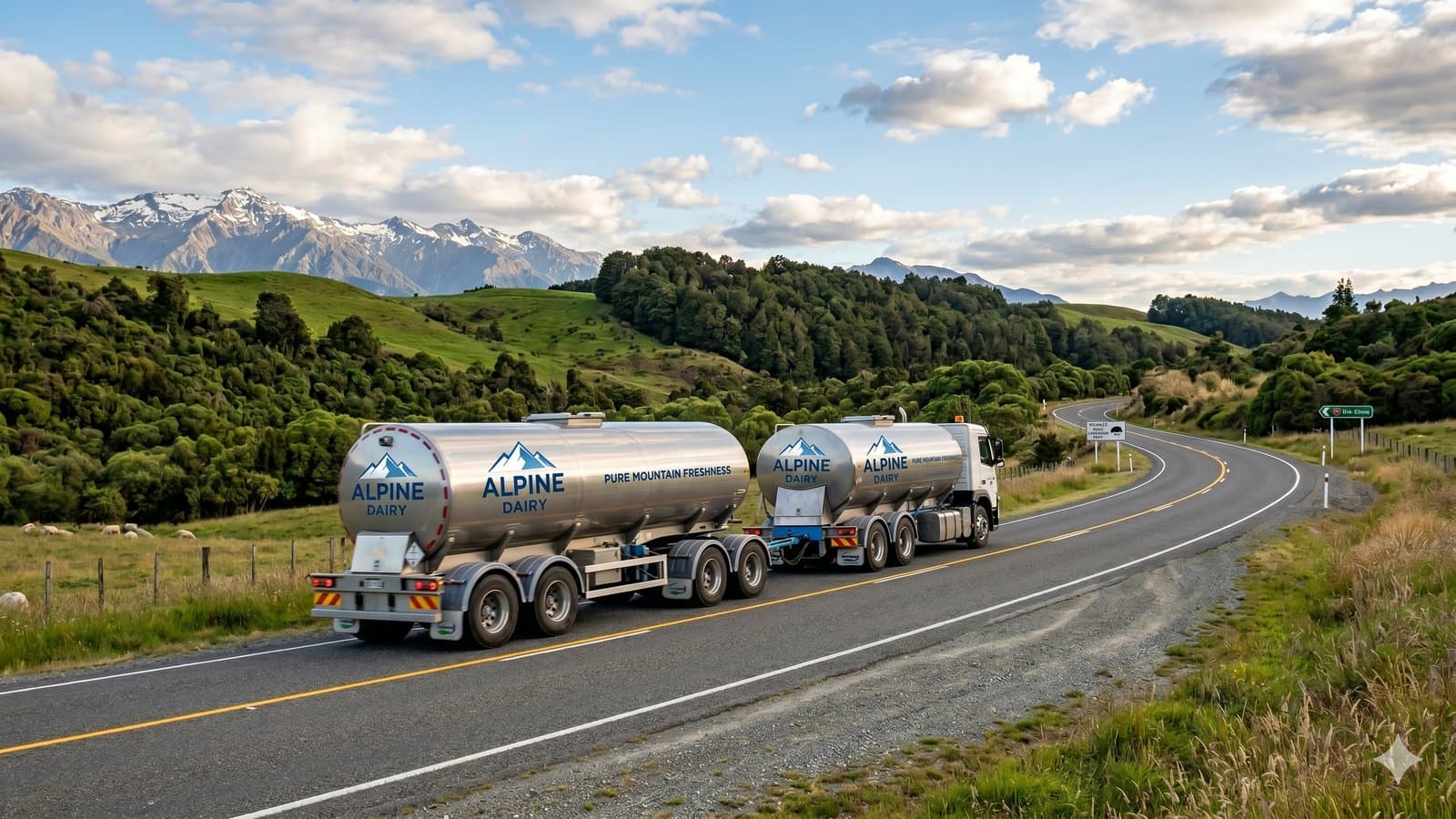
Fonterra and Waikato dairy — the milk tanker network
The Waikato is New Zealand's highest milk-producing region by volume. Tens of millions of litres of milk flow from Waikato farms to Fonterra processing sites at Waitoa, Te Rapa, Morrinsville, and beyond every day of the dairy season (July through May). The milk tanker fleet that collects this milk operates around the clock on a network of sealed and unsealed rural roads across the Waikato basin.
For milk tanker operators, insurance must address the full range of tanker-specific risks. Milk load contamination — where a diesel or cleaning chemical contaminant renders a load unfit — is a significant exposure. Environmental liability for milk spills on rural roads is a requirement: even a non-hazardous spill of milk can affect waterways and attract regional council clean-up obligations. Dairy company contract liability, where the carrier is responsible for load losses under the Fonterra supply agreement, is a specific cover that must be arranged through a specialist broker.
Frankton saleyards — livestock transport hub
Hamilton's Frankton saleyards are one of the North Island's busiest livestock trading centres. On sale days, livestock carriers converge on the saleyards from farms across Waikato, King Country, and the Bay of Plenty. The traffic volumes around the Frankton area on sale days are significant, and minor livestock carrier incidents in the saleyard environs are not uncommon.
For livestock carriers operating out of Hamilton, the insurance package must include livestock mortality cover, biosecurity liability (Mycoplasma bovis risk is ongoing in Waikato), and cleanup and decontamination costs for livestock incidents on public roads. The Animal Welfare Act 1999 imposes journey time and water access obligations that, if breached, can affect the insurance position in a claim.
Ready to get specialist cover?
Connect with a specialist broker — response within 24 hours.
SH1 corridor freight — the busiest freight highway
SH1 through Hamilton and the broader Waikato is the country's busiest freight highway. Artics running between Auckland and the rest of the North Island use this corridor, and the bypass and expressway sections around Hamilton itself carry enormous daily vehicle volumes. The SH1/SH3 junction at Ohaupo is a critical freight node: trucks bound for New Plymouth, Waitomo, and the King Country branch off here, while the main trunk south continues towards Taupo and Palmerston North.
High-volume freight highways generate a specific claims pattern. Rear-end incidents in heavy traffic, overtaking accidents on two-lane sections south of Huntly, and fuel theft at rest areas are all features of this corridor. For fleet operators running large numbers of vehicles on SH1, a fleet telematics programme — which monitors speed, braking, and fatigue events — both reduces incidents and provides evidence of responsible operations that can positively influence your renewal premium.
Agricultural chemical tankers — specialist risk
Hamilton is also a hub for agricultural chemical distribution. Fertiliser tankers, spray contractors, and agrichemical distributors operate a significant tanker fleet across Waikato. These vehicles carry materials classified under HSNO, and the insurance requirements are specific: hazardous goods endorsements, environmental liability, and specialist pollution liability cover for agrichemical spills on rural roads or into waterways.
Regional councils (Waikato Regional Council) have strong enforcement powers under the Resource Management Act, and an agrichemical spill that contaminates a stream or groundwater can attract both enforcement action and significant clean-up cost liability. Make sure your tanker insurance specifically addresses these exposures.
Construction growth in Hamilton
Hamilton has experienced significant residential and commercial development growth over the past decade. Construction truck volumes in the city and surrounding growth areas (Rotokauri, Te Kowhai, Te Kauwhata) are high. Tipper trucks, concrete trucks, and logistics support vehicles for construction projects face the same urban operating risks as their counterparts in Auckland — tight access, pedestrian proximity, and the frequency of minor incidents in built-up areas.
Ready to get specialist cover?
Connect with a specialist broker — response within 24 hours.
Common Vehicle Types in Hamilton
Click any vehicle type to explore specialist cover options and coverage requirements.
Frequently Asked Questions — Hamilton
Do Fonterra milk collection contracts require specific insurance levels?
Yes. Fonterra supply contracts with transport carriers include minimum insurance requirements covering public liability, vehicle insurance, and often specific milk load contamination cover. Your broker should review your Fonterra contract and confirm that your policy meets all contractual requirements before the season starts.
What biosecurity liability do Waikato livestock carriers need?
Given the ongoing Mycoplasma bovis response and Waikato's high-density dairy farming, biosecurity liability cover is strongly recommended for any livestock carrier operating in the region. This covers your legal liability if disease is inadvertently transported between properties through inadequately cleaned or disinfected vehicles.
Is agricultural chemical transport covered under a standard tanker policy?
No. Agrichemical tankers carrying HSNO-classified materials need specific hazardous goods endorsements, pollution liability extensions, and environmental clean-up cover. A standard tanker policy focused on dairy or water may not automatically include these extensions. Always disclose the nature of all materials you carry to your broker.
Get a Quote — Hamilton
Specialist broker response within 24 hours
Other Locations
Specialist Brokers
Connect with brokers who know the Hamilton freight market and can structure cover for your operation.
Compare Brokers