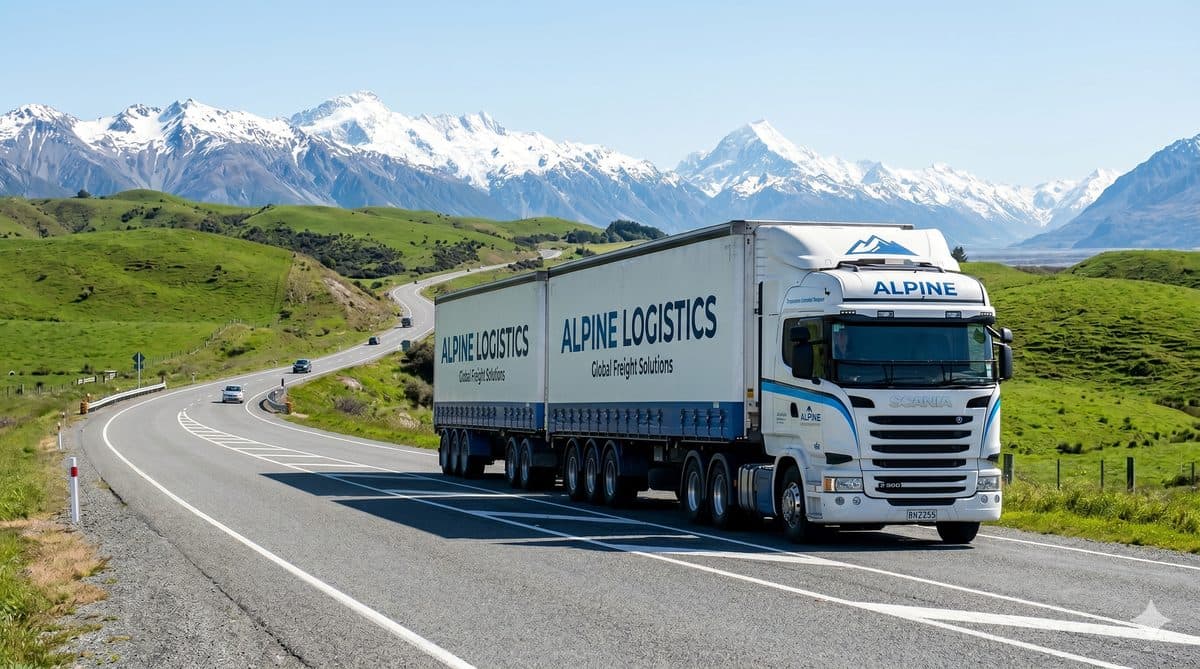
Heavy goods vehicle insurance is one of the most complex areas of commercial insurance in this country. The vehicles are expensive, the loads are consequential, the roads are challenging, and the regulatory environment is demanding. Yet many HGV operators are underinsured — not because they are careless, but because the insurance market is confusing and full of jargon.
This guide cuts through the complexity. By the end, you will understand what each cover does, why it matters, how to price it, and how to avoid the most common mistakes operators make.
What counts as an HGV?
In insurance terms, a heavy goods vehicle is typically defined as any motor vehicle with a gross vehicle mass (GVM) exceeding 3,500 kg — or, for combination vehicles, a gross combination mass (GCM) exceeding 3,500 kg. This covers everything from a large rigid delivery truck to a 44-tonne articulated semi-trailer combination.
The category includes: articulated trucks (prime movers and semi-trailers), rigid body trucks (curtainsiders, flat decks, crane trucks, tippers), purpose-built specialist vehicles (logging trucks, livestock carriers, tankers, refrigerated units), and heavy haulage vehicles (multi-axle trailers for overdimension loads).
Waka Kotahi NZTA publishes the full vehicle classification framework, including the licensing requirements for each vehicle class. Understanding where your vehicles sit in that framework is the starting point for an insurance conversation.
The four essential covers
Every HGV operation — regardless of size, sector, or vehicle type — needs four core insurance covers.
Ready to get specialist cover?
Connect with a specialist broker. Response within 24 hours.
Comprehensive motor vehicle insurance covers loss or damage to your vehicle: collision, fire, theft, storm, flood, vandalism, and rollover. For HGVs, the most critical decision is agreed value vs market value. Agreed value locks in the settlement amount — essential when replacement costs are $200,000–$500,000 and vehicle supply is constrained. A 2022 Kenworth T909 that cost $420,000 new and carries a book value of $290,000 may cost $360,000 to replace with a comparable used unit today. Agreed value at $360,000 covers the replacement. Market value at $260,000 leaves you with a $100,000 gap to fund.
Carriers liability covers your legal liability for goods belonging to someone else. Under the Contract and Commercial Law Act 2017 (CCLA), you are responsible for freight in your care from acceptance to delivery. A single lost load of pharmaceutical products can generate a $200,000+ claim against your business. Carriers liability is not optional for any operator carrying third-party freight.
Public liability covers the rest: loading and unloading incidents, crane operations, yard activities, escaped livestock, and any liability arising from your operations that does not directly involve the vehicle in a road collision. Minimum recommended: $2 million. For logging, tanker, and heavy haulage: $5–$10 million.
Road clearing and reinstatement covers the invoice that Waka Kotahi NZTA or the local roading authority sends after a serious highway incident. These bills cover traffic management, specialist recovery, surface reinstatement, and emergency management — and they arrive 60–90 days after the incident. A typical serious HGV rollover on a busy State Highway generates costs of $80,000–$250,000. Standard motor vehicle policies include $10,000–$25,000 of road clearing cover. A specific road clearing extension of $100,000–$250,000 is strongly recommended.
Pricing guide by vehicle type and cover
The following gives a broad indication of annual premium ranges for operators with a clean claims record and typical NZ operations. Individual pricing will vary significantly based on agreed value, driver experience, claims history, routes, and cargo type.
Owner-operated articulated truck (general freight): $6,000–$15,000/year for a comprehensive programme including motor vehicle, carriers liability to $500,000, public liability to $5M, road clearing to $100,000, and downtime cover at $1,000/day.
Ready to get specialist cover?
Connect with a specialist broker. Response within 24 hours.
Logging truck (single vehicle): $12,000–$28,000/year. Premium is elevated by off-road exposure, recovery cost risk, and public liability for log spillage.
Tanker (fuel or chemical): $9,000–$22,000/year, depending on cargo classification and whether environmental liability is included.
Livestock carrier: $8,000–$20,000/year including animal mortality extension.
Fleet of 5+ artics (general freight, burning cost rated): $3,000–$8,000 per vehicle per year depending on claims experience.
The specialist covers that matter for your sector
Beyond the four essentials, a range of specialist covers apply to specific vehicle types and sectors.
Downtime / loss of use pays a daily benefit while your truck is off the road for repairs. In the current environment, Scania and Volvo parts lead times are running at 8–20 weeks from Europe. A 90-day downtime benefit at $1,500/day protects $135,000 of lost income during an extended repair. Essential for owner-operators and operators with tight cash flow.
Ready to get specialist cover?
Connect with a specialist broker. Response within 24 hours.
Livestock mortality covers the value of animals that die in transit due to covered events. Standard carriers liability is not designed for live cargo. Livestock carriers need a specific extension — and should check that the definition covers both accident-related mortality and stress-related mortality following a covered incident.
Environmental/pollution liability covers remediation costs following a fuel or chemical spill. Under the Resource Management Act 1991, the operator responsible for a discharge into water or onto land is liable for remediation. A diesel spill that reaches a waterway can generate $200,000–$800,000 in cleanup costs. Mandatory for all tanker operators; standard public liability policies typically exclude pollution.
Personal accident pays a lump sum and weekly income benefit if the driver is seriously injured. ACC covers medical treatment and up to 80% of pre-injury earnings, capped at approximately $2,600/week. For owner-operators earning above that threshold, personal accident provides the top-up.
Employers and statutory liability covers WorkSafe NZ fines and penalties, and employment relations claims. Essential for operators who employ drivers. Fines under the Health and Safety at Work Act 2015 can reach $3 million for organisations for category 1 offences.
The NRC and Transporting NZ programmes
Two of the major industry bodies — the National Road Carriers Association and Transporting NZ — have preferred insurance programmes specifically designed for their members.
The NRC programme (through Marsh NZ) is particularly strong for owner-operators and smaller fleet operators, with specialist underwriting access and carriers liability as a core inclusion. The Transporting NZ programme (through Gallagher NZ) suits freight and logistics operators wanting a broad package including personal accident, fuel contamination cover, and hydraulic breakdown.
Ready to get specialist cover?
Connect with a specialist broker. Response within 24 hours.
Industry association membership is worth evaluating not just for the insurance programme access, but for the advocacy, compliance support, and industry intelligence these bodies provide. The NZ Heavy Haulage Association (NZHHA) has an arrangement with Rothbury, which describes itself as a partner of the association, covering logging, heavy haulage, and specialist transport operators.
The most common mistakes HGV operators make
Under-insuring on agreed value. Setting the sum insured at book value rather than replacement cost. In the current market, a 2021 Kenworth has a book value of around $180,000 but a replacement cost of $280,000+. Insure for replacement cost.
Missing carriers liability. Assuming the motor vehicle policy covers freight claims. It does not. Carriers liability is a separate and essential cover for any operator carrying third-party goods.
Ignoring road clearing costs. The most common gap in HGV programmes. A $250,000 road clearing extension costs a few hundred dollars per year and can protect you from a six-figure NZTA invoice.
Inadequate public liability limits. $1 million is not enough for serious HGV incidents. $2 million is the minimum; $5 million is recommended for specialist operations.
Not disclosing specialist operations. Off-road use, bush roads, dangerous goods, and overdimension loads all require specific disclosure. Non-disclosure at underwriting can result in cover being voided at claim time.
Ready to get specialist cover?
Connect with a specialist broker. Response within 24 hours.
Skipping downtime cover. With current parts delays of 12–20 weeks for European trucks, an operator without downtime cover faces months of zero income while still servicing finance obligations.
The specialist broker advantage
HGV insurance cannot be compared on a price aggregator website. The coverage differences between policies are substantial, the appropriate limits vary by operation, and specialist extensions require specific expertise to structure correctly.
Specialist brokers — including Marsh NZ (which states it is the preferred insurance partner for the National Road Carriers Association, a partnership it dates to 2009), Rothbury (a partner of the NZ Heavy Haulage Association, in its own words), and Gallagher NZ (works with transport industry bodies including MTA and Transporting NZ)) — have dedicated commercial transport teams with deep expertise in this sector. They access mainstream insurers (NZI, Vero, QBE) as well as Lloyd's of London syndicates for specialist risks that the standard market declines.
The bottom line: HGV insurance is specialist. The investment in the right programme, structured by the right broker, pays for itself many times over when you actually need to claim. Review your current cover with a specialist and make sure the programme reflects your actual operation.
General information for heavy vehicle operators, drawn from the primary sources linked in the article. It is not personal advice. Information about providers was accurate at the time of publishing and may change.