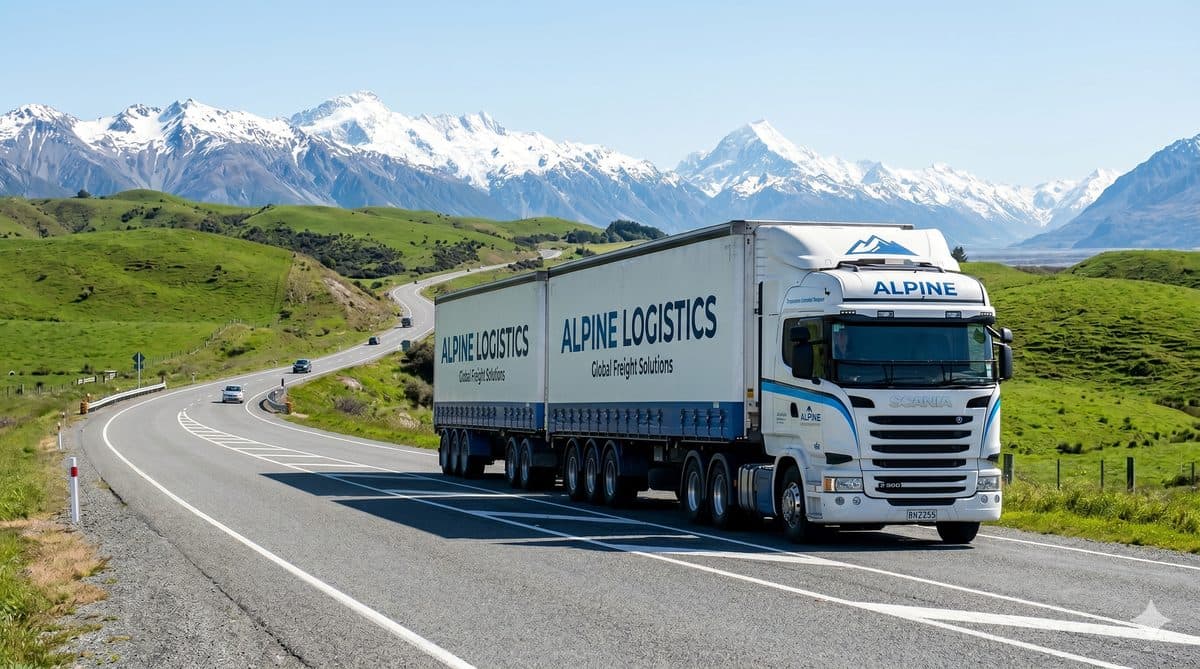
Flatbed & Lowloader Trucks Insurance
Specialist cover for flatbed, curtainsider, and lowloader heavy vehicles carrying construction materials, plant, and overdimension loads across New Zealand's state highway network.
⚠️ Key Risks
- •Load securing failure — load shift or cargo ejection at speed
- •Bridge weight limit violations — structural damage liability
- •Overdimension load escort and pilot car requirements
- •Height and width clearance incidents on oversize routes
- •Cargo damage during crane loading and unloading
✓ Coverage Checklist
- ✓Comprehensive motor vehicle insurance (agreed value for prime mover and trailer)
- ✓Carriers liability for cargo in transit
- ✓Public liability including overdimension load incident cover
- ✓Road clearing and infrastructure reinstatement
- ✓Downtime / loss of use for principal contracts
- ✓Environmental liability if carrying hazardous goods
Flatbed and lowloader operations serve the core of New Zealand's construction and infrastructure sector. Moving prefabricated buildings, large plant and machinery, wind turbine components, steel structures, and other oversized loads requires both specialist vehicles and a specialist insurance programme. The exposure is different from general curtainsider freight in several critical ways, and standard HGV policies rarely account for all of them.
Load Securing — The Primary Liability Risk
Load securing failure is the defining liability risk for flatbed operators. A load that shifts at speed — whether a steel beam, a prefabricated wall panel, a piece of large plant, or a tied-down vehicle — can become a projectile causing catastrophic damage to third-party vehicles, infrastructure, and people. Under New Zealand's [Land Transport Rule: Heavy Motor Vehicle Loads 2010](https://transport.govt.nz), operators have a duty to ensure all loads are secured to the prescribed standard before departure.
When a load securing failure contributes to an injury or death, the legal consequences are severe. [WorkSafe NZ](https://worksafe.govt.nz) may investigate if the incident occurs in a workplace context. The injured parties or their families may pursue civil claims for losses that ACC does not cover. And the operator's road safety record — as assessed by [Waka Kotahi NZTA](https://transport.govt.nz) under the operator fitness framework — may be affected. Public liability cover with no load-securing exclusion is essential; check your policy wording carefully.
Overdimension Loads and NZTA Permits
Loads exceeding normal legal dimensions — height over 4.25m, width over 2.5m, or length over 20m for a combination — require NZTA overdimension permits and must travel on approved routes. Non-compliant movement is an offence and will affect your insurance position if an incident occurs during a non-permitted move. Your insurer will review permit compliance as part of any major claims assessment.
Pilot car requirements, police escort requirements, and time-of-travel restrictions all form part of the permit conditions. The cost of a non-compliant move is not just the infringement — it is the potential voiding of your cover at exactly the moment you need it most.
Ready to get specialist cover?
Connect with a specialist broker — response within 24 hours.
Bridge Weight Limits
New Zealand's bridge stock includes many structures with posted weight limits below the legal maximum for standard heavy combinations. Operators carrying heavy loads must plan routes specifically to avoid restricted bridges, using [Waka Kotahi's online mapping tools](https://transport.govt.nz) and local council bridge data. Bridge structural damage caused by an overweight crossing is a serious liability — NZTA bridge repair invoices for overweight incidents can reach $500,000 or more, and they are not covered by standard motor vehicle policies unless specific bridge damage cover is added.
Curtainsider Operations
Curtainsider flatbed operators — carrying palletised goods, building materials, and general freight under a side-curtain — face a somewhat different risk profile from heavy haulage. Load securing liability is still relevant, but the primary concerns are theft (curtainsiders are the most commonly targeted vehicle type for cargo theft), weather damage to exposed cargo, and rear-end incidents on highways. A specialist curtainsider cover programme addresses all three.
Getting the Right Cover Structure
A flatbed or lowloader policy needs to be assembled from several components: motor vehicle (agreed value for both prime mover and trailer as scheduled separately), carriers liability matched to the value of loads you typically carry, public liability with no load-securing exclusion, road clearing to at least $250,000, and environmental liability if you carry any hazardous goods. Your broker should review your NZTA permit history and your load securing procedures as part of the underwriting process — operators with documented load securing management will achieve better terms than those who cannot demonstrate their systems.
Connect with a specialist broker to build a programme that covers the full range of your flatbed or lowloader operation.
Frequently Asked Questions
Am I covered if a load shifts and damages another vehicle on the motorway?
Yes, if your public liability policy has no load-securing exclusion and you were compliant with the Land Transport Rule requirements at the time. Check your policy wording carefully — some standard HGV policies exclude liability arising from load securing failure. A specialist policy removes this exclusion.
What happens if I move an overdimension load without a permit and have an incident?
Non-permitted overdimension movement is a regulatory offence and will affect your insurance position. Insurers review permit compliance as part of claims assessment. A serious incident during a non-compliant move could result in the insurer declining or reducing the claim. Always obtain the correct NZTA permit before moving.
Should my trailer be separately scheduled on my policy?
Yes. Separate scheduling of the trailer with its own agreed value ensures you are not underinsured if the trailer alone is damaged or destroyed. This is particularly important for specialist trailers — step-decks, extendable beams, and multi-axle low-loaders — which can be worth as much as the prime mover and have long replacement lead times.
Get a Flatbeds & Lowloaders Quote
Specialist broker response within 24 hours
Related Coverage Types
Specialist Brokers
Access the brokers who specialise in flatbeds & lowloaders insurance.
Compare Brokers