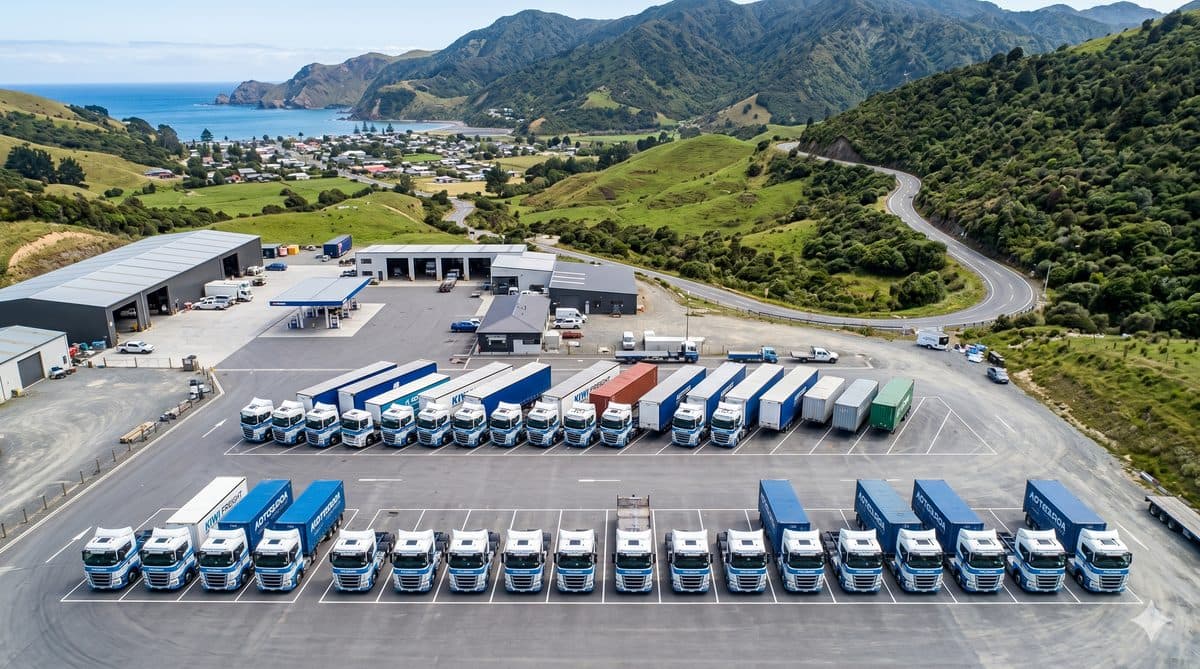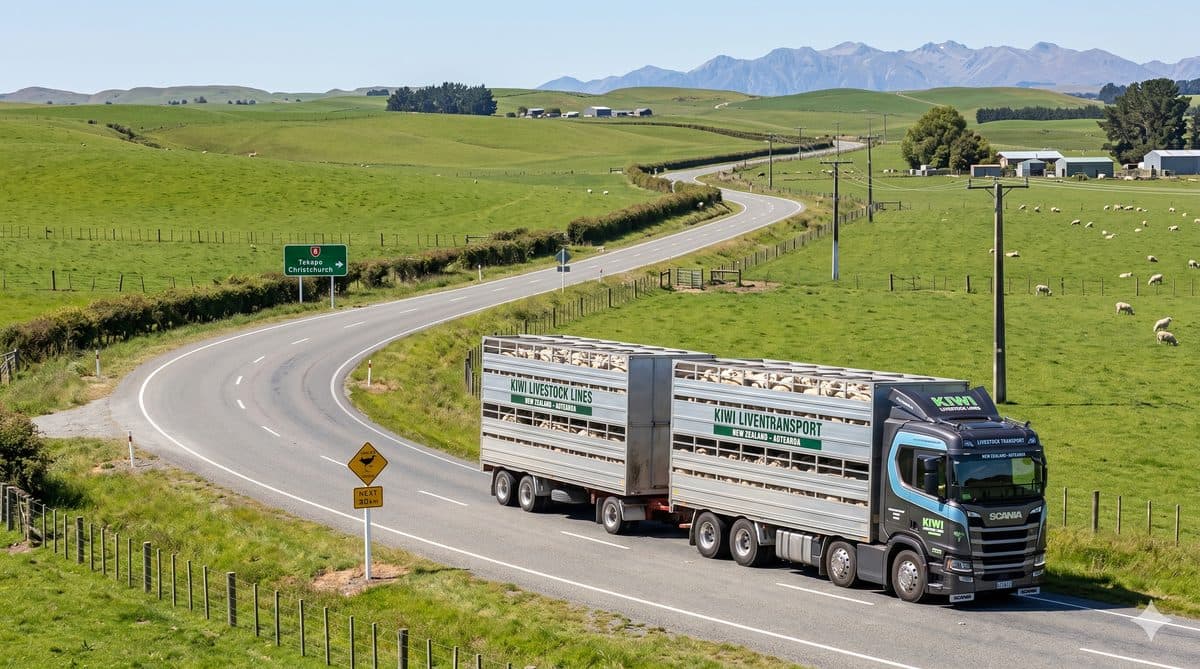
Almost every heavy vehicle fleet of any size now runs telematics. The units went in for fuel management, for road user charge reconciliation, for job dispatch, or because a major customer required visibility on delivery times. What most operators have not done is connect that system to the one annual conversation where the data would be worth real money — the insurance renewal.
Fleet premiums are set on a blend of claims history, vehicle schedule, driver profile, and the underwriter's judgement about how well the operation is managed. Claims history is backward-looking and cannot be changed. The vehicle schedule is what it is. Driver profile shifts slowly. The one variable an operator can genuinely move inside a single renewal cycle is the underwriter's assessment of management quality — and telematics data, presented properly, is the most persuasive evidence available for that.
This article covers what underwriters actually want to see, how to present it, and where telematics creates exposure rather than removing it.
What Underwriters Are Buying
An underwriter pricing a fleet is trying to answer one question: how likely is this operation to produce a large loss in the next twelve months? Small attritional claims — windscreens, minor panel damage, mirror strikes — matter for loss ratio but are largely predictable. The pricing risk sits in the tail: the rollover, the multi-vehicle collision, the fatality.
Tail events correlate strongly with a handful of behaviours. Excessive speed for conditions. Harsh braking frequency, which is a proxy for following distance and hazard anticipation. Driving hours and rest patterns. Night driving proportion. Cornering forces, which for high-centre-of-gravity vehicles are the direct precursor to rollover.
Every one of those is measured by a standard telematics unit. An operator who can demonstrate that these metrics are monitored, trended, and acted upon is presenting a materially different risk from an operator who cannot, even if their claims records look identical on paper.
Ready to get specialist cover?
Connect with a specialist broker — response within 24 hours.
The difficulty is that underwriters rarely ask for the data explicitly, and most brokers do not volunteer it. The renewal submission goes in with a claims summary and a vehicle schedule, and the pricing comes back based on that. The operator with an excellent safety management system gets priced alongside the operator with none.
Presenting Data That Actually Moves Pricing
Raw telematics exports do not help. Nobody in an underwriting team is going to work through a spreadsheet of individual harsh-braking events. What works is a short, structured summary that shows direction of travel and management response.
A useful submission pack runs to two or three pages and covers the following.
Trend data across at least twelve months on your core safety metrics — speeding events per 1,000 km, harsh braking per 1,000 km, harsh cornering per 1,000 km, and average driver score if your system produces one. What matters is the trend line. An operator whose harsh-braking rate has fallen 40 percent over a year is telling a story about active management; an operator with a flat line is telling a story about a system that is switched on but not used.
Evidence of intervention. Show that scores trigger something. A one-page description of your escalation process — what happens when a driver's score drops below threshold, who has the conversation, what retraining follows, what the consequence is for repeated events — is more persuasive than the numbers themselves. Underwriters have seen plenty of fleets with dashboards nobody looks at.
Fatigue and hours management. If your system integrates with electronic logbooks or work-time records, show that you monitor for hours violations and that you have a process when one appears. Fatigue findings are among the most damaging elements in any serious incident investigation, and demonstrating active management here carries weight.
Ready to get specialist cover?
Connect with a specialist broker — response within 24 hours.
Speed compliance by road type, if your system supports it. Compliance against open-road limits is table stakes. Compliance in 50 km/h zones and around schools and worksites is a better indicator of driver culture.
Camera coverage. Forward-facing and driver-facing camera systems have become common, and they change claims outcomes materially. An operator with forward-facing footage on every unit will settle disputed liability claims faster and more favourably than one without. That is a direct benefit to the insurer's loss ratio and a legitimate argument for pricing recognition.
The Claims Argument
The pricing conversation is only part of the value. The bigger financial effect of telematics for most fleets shows up in how claims resolve.
A significant proportion of heavy vehicle liability claims turn on disputed facts: who changed lanes, who ran the light, what the following distance was, whether the truck was speeding. Without evidence, insurers frequently settle on a shared-liability basis simply because contesting the claim costs more than conceding it. Every one of those settlements lands in your claims history and feeds into next year's premium.
Forward-facing camera footage combined with speed and braking data resolves most of these disputes decisively. Where the truck was not at fault, the claim gets defended and recovered. Where the truck was at fault, the operator learns something specific and actionable rather than absorbing a vague at-fault marker.
Over a three-year cycle, the effect on a mid-sized fleet's claims record can be substantial — and claims record is the single largest input into fleet pricing.
Ready to get specialist cover?
Connect with a specialist broker — response within 24 hours.
Where Telematics Creates Exposure
It would be misleading to present this as risk-free. Data that proves good practice also proves bad practice, and operators should understand the exposure they are creating.
If your system records that a vehicle was travelling 20 km/h over the limit at the point of a fatal collision, that record exists and it is discoverable. If it shows a pattern of work-time breaches that management had visibility of and did not act on, that is evidence of an organisational failing under health and safety duties, not just a driver error. WorkSafe investigators and plaintiff lawyers both know what telematics systems record.
The conclusion is not to avoid collecting the data. It is that collecting data and ignoring it is the worst of both worlds — you carry the evidentiary exposure without the safety benefit or the pricing benefit. If your system flags an issue, there needs to be a documented response. That response is what converts the data from a liability into a defence.
There is also a privacy and employment dimension. Driver-facing cameras and location monitoring need to be introduced properly: a clear policy, consultation with drivers, a stated purpose, defined retention periods, and controls on who can access footage. Systems introduced without that groundwork generate industrial friction and, in some cases, undermine their own admissibility.
Choosing a System That Supports the Insurance Case
Not every telematics installation produces data that is useful at renewal. Fleets that bought purely on price, or that inherited a system from a customer requirement, often find the reporting is built for dispatch rather than for safety analysis.
The features that matter for insurance purposes are reasonably specific. You want event-based reporting normalised per distance travelled rather than raw event counts, because raw counts simply reward vehicles that do less work. You want driver-level attribution that survives vehicle swaps, which requires driver identification of some kind rather than assuming one driver per unit. You want data retention of at least twenty-four months, because a twelve-month trend needs a prior twelve months to be a trend. And you want the ability to export a clean summary report, because nobody in your business should be building renewal packs by hand each year.
Ready to get specialist cover?
Connect with a specialist broker — response within 24 hours.
Camera integration is worth thinking about carefully. Event-triggered forward-facing footage tied to harsh braking and impact detection gives you the claims-defence benefit without the storage cost of continuous recording. Driver-facing cameras deliver additional insight into distraction and fatigue but require significantly more care on the employment and privacy side, and the operational benefit needs to be weighed against the cultural cost in a labour market where experienced heavy vehicle drivers are not easy to replace.
Where a system is being replaced or upgraded, sequence it well ahead of renewal. A changeover three months before your renewal date leaves you with a fragmented dataset and no usable trend, which is precisely the position you were trying to move away from.
What Fleet Size Changes
The economics differ considerably by fleet size. For an operator running four or five units, telematics will rarely produce a headline premium reduction on its own — the premium base is not large enough for an underwriter to spend much time differentiating. The value at that scale sits almost entirely in claims defence and in avoiding the single loss that would otherwise reprice the account.
For fleets above roughly fifteen to twenty units, the picture changes. Premiums become large enough that underwriters will engage with a well-built submission, and at that scale the difference between a standard rate and a negotiated one is measured in tens of thousands of dollars annually. Larger fleets should also be looking at whether a higher deductible structure makes sense — telematics-driven reductions in attritional claims make self-insuring the small stuff considerably more attractive, and the premium saving from a higher excess is often more accessible than a straight rate reduction.
Practical Steps Before Your Next Renewal
If you want telematics to affect your next renewal, the work needs to start roughly ninety days out.
Pull twelve months of trend data on your core metrics and check that it is clean. Fleets that have changed providers, added vehicles, or had units offline will have gaps, and a gappy dataset is worse than no dataset.
Ready to get specialist cover?
Connect with a specialist broker — response within 24 hours.
Write down your intervention process, even if it currently lives in your head. One page. Threshold, trigger, conversation, retraining, escalation.
Identify the two or three metrics where you have improved most and lead with those. Do not present a comprehensive data dump; present a narrative supported by numbers.
Brief your broker properly. A broker who understands what you are doing can build it into the submission and argue it with the underwriter. A broker who receives a spreadsheet the week before renewal cannot.
Ask explicitly for pricing recognition. Underwriters will not volunteer a discount for safety management, but they will respond to a well-evidenced argument, and in a market where fleet capacity is competitive, differentiation matters.
The Realistic Expectation
Telematics is not a magic lever. A fleet with a poor claims record will not price well because it has good dashboards. What telematics does is give a well-run operation the means to prove it is well-run, and it gives an operation that has had a bad year a credible story about what has changed.
That second use case is where the value is highest. After a significant loss, the renewal conversation is difficult and options narrow. Being able to show an underwriter exactly what changed operationally after the incident — new thresholds, retraining completed, measured improvement in the specific behaviour that caused the loss — is the difference between a manageable increase and a market that will not quote.
Ready to get specialist cover?
Connect with a specialist broker — response within 24 hours.
If you are carrying telematics data that has never made it into an insurance submission, a specialist commercial vehicle broker can help you shape it into something underwriters will price against. Get a quote today at hgvinsurance.co.nz.
Specialist in heavy vehicle insurance with extensive experience in commercial transport risk management. Connected with specialist HGV brokers across the country.