The distinction between an owner-operator and an employee driver is one of the most important structural questions in road transport — and it has significant insurance implications for both parties. Getting the structure right, and insuring it correctly, is fundamental to protecting the business and the individual.
The structural difference: who owns the asset?
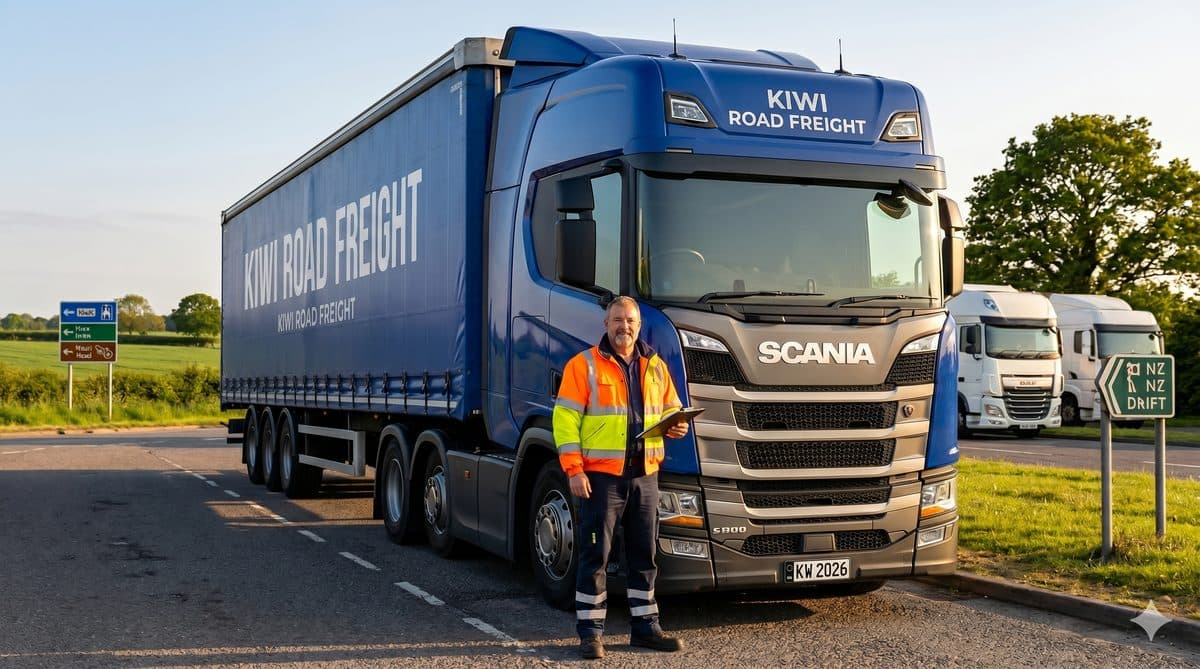
An owner-operator is a person who owns their truck and operates it either independently under their own freight contracts or, more commonly, under a sub-contract or lease-operator arrangement with a principal carrier. The truck is their asset, their liability, and their income source.
An employee driver is a person who drives a truck owned by their employer. The truck is the employer's asset. The employer carries the insurance. The employee is covered by the employer's motor vehicle policy when driving on authorised company business, and by ACC for work-related injuries.
The insurance obligations sit entirely differently between these two structures. The owner-operator must arrange and maintain their own comprehensive insurance programme. The employee driver has almost no personal insurance obligation for the vehicle they drive — the employer handles vehicle insurance, while ACC handles the driver's medical and income replacement.
The IRD contractor test and its insurance implications
The IRD's contractor test — used to determine whether a person working in a transport operation is truly an independent contractor (owner-operator) or is effectively an employee — has direct insurance implications.
Key factors the IRD considers: does the person own and control the asset (truck) they use to perform the work? Do they carry the financial risk of the business (insurance, maintenance, fuel)? Do they work for multiple clients, or exclusively for one principal? Can they subcontract the work to others?
Ready to get specialist cover?
Connect with a specialist broker. Response within 24 hours.
A person who fails the contractor test — who is effectively an employee despite a contract labelling them otherwise — may have rights to be on the employer's fleet insurance and workers' compensation arrangements. The insurance implications of misclassification are significant: if an owner-operator is later determined to have been an employee, the employer may face retrospective obligations.
This is not just a tax issue — it shapes who is responsible for what insurance, and who is exposed when something goes wrong. If you are entering or operating under a sub-contract arrangement, review the contract with your broker and, if necessary, with employment law advice to confirm the structure is correct and appropriately insured.
Owner-operator insurance obligations: the full picture
An owner-operator must arrange and maintain the following covers.
Motor vehicle — agreed value: the truck is the owner-operator's primary business asset. Agreed value at current replacement cost is non-negotiable. Market value leaves the owner-operator exposed to a settlement gap that can end the business.
Carriers liability: the owner-operator carries freight owned by clients. Every load is someone else's goods. Carriers liability at an appropriate limit (typically $250,000–$1,000,000 depending on cargo type) is essential.
Public liability: operations at client premises, loading and unloading, and yard activities all create third-party liability exposure beyond the motor vehicle policy. Minimum $2 million; $5 million for specialist operations.
Ready to get specialist cover?
Connect with a specialist broker. Response within 24 hours.
Road clearing cover: owner-operators are personally exposed to NZTA road clearing invoices after serious incidents. This cover is often missing from basic programmes assembled without specialist advice.
Downtime cover: no truck means no income for an owner-operator. Downtime cover at the right daily rate and benefit period is the cash flow protection that keeps the business alive during an extended repair.
Personal accident — the ACC gap: ACC covers work-related injuries and pays 80% of pre-injury earnings capped at approximately $130,000 per year. Owner-operators earning above this threshold — which many successful operators do — need personal accident cover to top up ACC to their actual income level.
Lease-operator arrangements: the hybrid structure
Many owner-operators work under a lease-operator arrangement — they own the truck but operate it under the principal carrier's authority, fuel card, and often their branding. This is common in long-haul freight and in dairy and agricultural transport.
Lease-operator arrangements create a specific insurance question: is the vehicle on the principal's fleet policy or the owner-operator's own policy? This varies by arrangement and must be confirmed in writing.
If on the principal's fleet policy: what is the owner-operator's excess contribution for claims? Are they covered for all operations they perform under the principal, and for any operations outside the principal's authority? What happens to the lease-operator's policy entitlements if the vehicle is damaged while on the principal's fleet policy?
Ready to get specialist cover?
Connect with a specialist broker. Response within 24 hours.
If on the owner-operator's own policy: the principal may need to be noted as an interested party. The owner-operator's carriers liability must cover sub-contracted loads under the principal's freight contracts. The agreed value must be set at true replacement cost rather than the principal's book value.
Review the lease-operator agreement in detail with your broker before policy placement. The contractual obligations in the agreement shape every element of the insurance structure.
Employee driver insurance: what the employer must provide
For employee drivers, the employer's insurance obligations include: comprehensive motor vehicle cover on all fleet vehicles operated by employees; employers liability cover (WorkSafe fines and employment relations claims); and a safety management system that meets WorkSafe NZ requirements under the Health and Safety at Work Act 2015.
The employer's motor vehicle policy covers the employee driver when operating on authorised company business. If an employee driver uses a company vehicle for personal purposes — even with employer permission — check whether the policy extends to personal use, or whether additional cover is required.
For employee drivers, ACC provides work-related injury cover: medical treatment, 80% of lost earnings (capped), and rehabilitation support. The employer pays ACC levies that fund this cover. There is no additional insurance obligation on the employee for work-related injuries.
Carriers liability: who is exposed?
In a sub-contractor structure, the carriers liability question is: who is exposed to the freight owner's claim if cargo is lost or damaged?
Ready to get specialist cover?
Connect with a specialist broker. Response within 24 hours.
The freight owner typically contracts with the principal carrier, not with the sub-contracting owner-operator. The principal carrier is therefore primarily exposed to the freight owner's carriers liability claim. The principal carrier then has a right of recovery against the sub-contractor's carriers liability policy if the loss occurred while in the sub-contractor's custody.
This means both the principal and the sub-contractor need carriers liability — but at different levels and with different structures. The principal needs limits that reflect the maximum value of cargo they accept responsibility for. The sub-contractor needs limits that reflect the maximum value of cargo they handle on any individual run.
Review your position in the carrier chain with your broker to confirm that your carriers liability is structured correctly for your role. The gap between a principal's exposure and a sub-contractor's cover is a common source of disputes after significant cargo losses.
General information for heavy vehicle operators, drawn from the primary sources linked in the article. It is not personal advice. Information about providers was accurate at the time of publishing and may change.