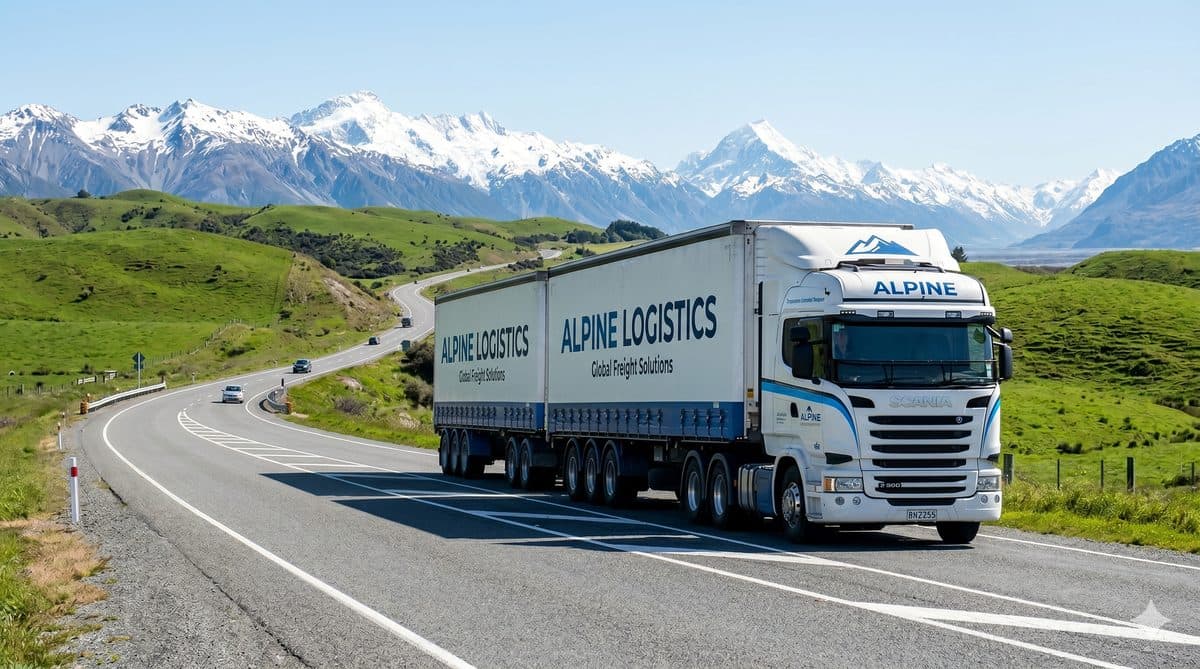
Operators who have spent the past decade managing permit paperwork for high productivity combinations have just had a meaningful chunk of that administration removed. The Heavy Vehicle Productivity Reform Amendment took effect on 6 August 2026, and it is the first substantive stage of a wider Land Transport Rules Reform Programme that will continue rolling out changes through to at least mid-2027.
Most of the industry commentary has focused, understandably, on the productivity and compliance-cost angle. Fewer permits means less time in front of a computer and fewer delays waiting on approvals. What has received almost no attention is the insurance dimension. Rule changes that alter how a vehicle is classified, how heavy it is permitted to run, and what paperwork sits behind that permission all feed directly into how an insurer underwrites and prices your fleet — and, more importantly, how a claim gets assessed if something goes wrong.
This article walks through what actually changed, what is still coming, and the specific things you should be raising with your broker before your next renewal.
What Took Effect in August
The headline change is the removal of the permit requirement for vehicles operating between 40 and 50 tonnes — the combinations known throughout the industry as 50MAX. Since the 50MAX scheme launched, operators have needed a permit specifying approved routes and conditions. That permit requirement has now gone for qualifying vehicles, with the operating parameters moved into the rule itself.
Alongside that, several administrative requirements have been stripped out. Rental operators moving unladen heavy vehicles between depots, or delivering them to customers, no longer need a high productivity motor vehicle permit for that movement. The requirement to display H-plates on high productivity vehicles has been removed from the Vehicle Dimensions and Mass rule. The bolster-attachment code has been incorporated by reference into the heavy vehicle rule rather than sitting as a separate instrument, and a number of definitions have been tidied up.
There is also a new set of pilot vehicle signage: OVERSIZE LOAD AHEAD, OVERSIZE LOAD FOLLOWS, and PREPARE TO PULL OVER. These are aimed at giving other road users clearer warning around overdimensional movements, and members of the Heavy Haulage Association will already be familiar with the consultation that produced them.
Ready to get specialist cover?
Connect with a specialist broker — response within 24 hours.
Further phases are queued. Implementation of the remaining approved changes is expected between November 2026 and June 2027, with public consultation on phase 3 of the Vehicle Dimensions and Mass review anticipated to open in October 2026 and phase 4 in mid-2027. In other words, this is not a one-off adjustment — it is the start of a multi-year sequence, and operators should expect to be revisiting their compliance and declaration position more than once.
Why a Permit Change Is an Insurance Change
Insurance for heavy vehicles is priced against a description of risk that you provide at inception and renewal. Gross combination mass, vehicle configuration, operating radius, and the routes you run are all part of that description. Permits have historically served a useful secondary purpose: they were external, documented evidence that a particular combination was authorised to operate at a particular weight on particular roads. When an underwriter or a loss adjuster wanted to verify that a vehicle was operating within its permitted envelope, the permit was the document they reached for.
Remove the permit, and that evidentiary trail moves. It does not disappear — the operating conditions still exist in the rule — but responsibility for demonstrating compliance shifts more squarely onto the operator's own records. If a 48-tonne combination is involved in a serious loss and the question of whether it was legally configured for the road it was on becomes live, you will be relying on your own vehicle specifications, weight records, and route documentation rather than a permit certificate.
That has three practical consequences.
First, your record-keeping needs to be at least as good as it was when permits existed. Keep the technical documentation for each combination: axle configurations, manufacturer plates, certified weights, and any engineering certification for modifications. If you previously filed the permit and considered the matter closed, replace that habit with a maintained vehicle file.
Second, your declared fleet schedule needs to be accurate and current. Where an operator has taken advantage of the reform to run a combination at a higher mass than it previously operated, that is a material change to the risk. A truck routinely carrying more weight has a different braking profile, a different rollover threshold, a different cargo exposure, and a different repair cost profile. Underwriters expect to be told.
Ready to get specialist cover?
Connect with a specialist broker — response within 24 hours.
Third, if you are among the operators who have upgraded configuration or added trailers on the strength of the reform, your sums insured almost certainly need revisiting. New trailing equipment purchased mid-term needs to be added to the policy, and agreed value figures set two years ago will not reflect current replacement costs in a market where fleet renewal cycles have accelerated.
The Material Change Trap
Every commercial motor policy contains a duty to disclose material changes to the risk during the period of cover, not just at renewal. This is the single most common way that otherwise well-run operations end up with a coverage argument at claim time.
The reform creates a specific and predictable version of this problem. An operator declares a fleet at renewal in, say, March. In August the rule change lands, and over the following weeks the operator reconfigures two units to run at higher permitted mass, adds a trailer, and starts servicing a route that was previously off-limits. None of that gets communicated to the insurer because none of it felt like an "insurance" decision — it felt like an operational one enabled by a regulatory change.
If a loss occurs on that route, in that configuration, the insurer is entitled to ask whether it was underwriting the risk it thought it was underwriting. Depending on the policy wording and the materiality of the change, outcomes range from an adjusted settlement to a declined claim.
The fix is administratively trivial. Send your broker a short note whenever you change vehicle configuration, operating mass, or the geographic scope of your operation. Most brokers will handle the endorsement without a premium change if the risk profile has not meaningfully shifted. The cost of telling them is close to zero; the cost of not telling them can be the entire claim.
Cargo and Liability Exposures at Higher Mass
Running heavier changes more than the vehicle risk. Under the Contract and Commercial Law Act 2017, a carrier's default liability position is limited, but the practical exposure attached to a single load rises with the load. A combination running at 50 tonnes is carrying more value per trip than the same operation running at 44, and carriers liability limits that were adequate at the lower figure may not be at the higher one.
Ready to get specialist cover?
Connect with a specialist broker — response within 24 hours.
Review your limit against the maximum value of any single consignment you now carry, not the average. Where you carry high-value freight — machinery, electronics, pharmaceuticals, or refrigerated product for the export chain — consider whether declared-value cover for specific movements is warranted alongside your base carriers liability.
Public liability deserves the same scrutiny. A heavier combination involved in a rollover produces a larger clean-up, more road damage, and a longer closure. Road clearing costs recoverable by the road controlling authority scale with the size of the event, and these are frequently the costs that surprise operators most after a serious incident. If your public liability limit has not been reviewed since before the reform, it is worth putting on the renewal agenda.
What to Do Before Your Next Renewal
There is a straightforward sequence here that takes an afternoon and removes most of the risk.
Start by producing a current, accurate list of every vehicle and trailer in the operation, with its configuration and the maximum mass at which it now operates. Compare that against the schedule attached to your current policy. Any discrepancy is a conversation to have now rather than after a loss.
Then look at your route profile. If the removal of permit conditions has opened up roads you did not previously run, note them. Underwriters are generally relaxed about route expansion within familiar territory and considerably less relaxed about, say, a fleet moving from urban distribution into steep back-country forestry work.
Review your sums insured against current replacement cost, particularly for any equipment purchased in the last eighteen months. Then review carriers liability and public liability limits against your current worst-case single-load and single-incident exposures.
Ready to get specialist cover?
Connect with a specialist broker — response within 24 hours.
Finally, put a note in the diary for October. Phase 3 consultation is expected to open then, and the submissions process is genuinely worth engaging with — Transporting New Zealand and National Road Carriers both make submissions on behalf of members, and operator input into those submissions carries weight. Changes that affect how you can run your fleet are worth having a say on before they are settled.
The Broader Point
Regulatory reform aimed at productivity is, on balance, good for operators. Fewer permits means lower compliance cost and faster decision-making. But productivity gains realised through heavier, longer, or more flexible operation are gains that come with a risk profile attached, and the insurance side of the equation does not update itself automatically.
The operators who come out of this reform programme best will be the ones who treat every configuration change, mass increase, and route expansion as a two-part decision: an operational one and an insurance one. The second part takes ten minutes and an email to your broker.
If your fleet has changed since your last renewal — or if it is about to, on the back of these rule changes — a specialist commercial vehicle broker can review your schedule, limits, and wordings against the operation you actually run today. Get a quote today at hgvinsurance.co.nz.
Specialist in heavy vehicle insurance with extensive experience in commercial transport risk management. Connected with specialist HGV brokers across the country.